
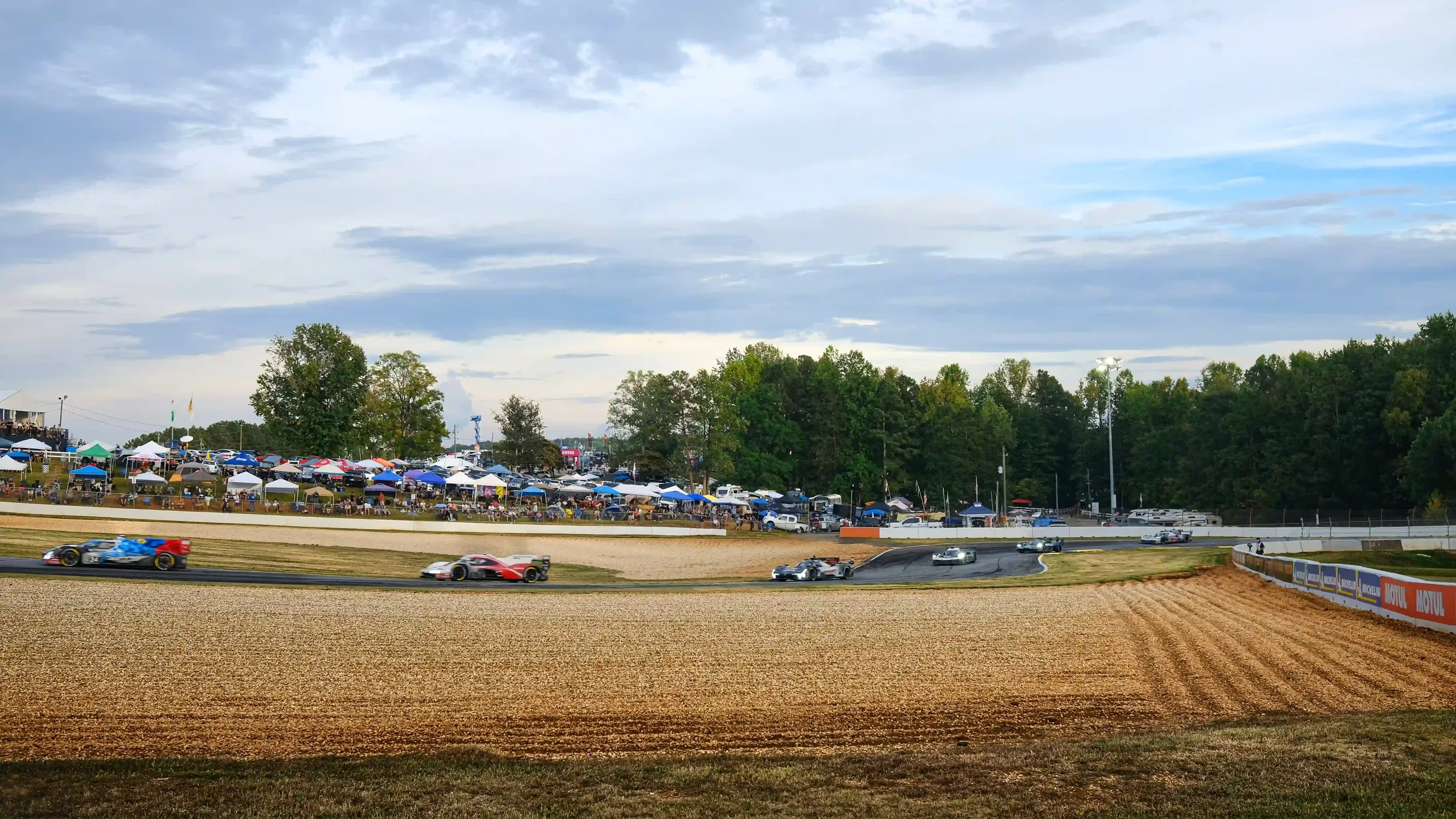
Ten hours of racing gives you plenty of time to find a favorite corner. Road Atlanta gives you plenty to choose from.
HOW TO GET HOOKED ON ENDURANCE RACING
PETIT LE MANS AT ROAD ATLANTA
Endurance racing runs against pretty much everything we’ve trained ourselves to expect.
There’s no quick payoff. No 90-minute window where you sit down, watch the thing, and go home. Attending one in person takes a little planning, a little patience, and a willingness to spend most of a day wandering around while very expensive race cars repeatedly try to pass one another at irresponsible speeds. If you show up with nothing but enthusiasm and a ticket, you can still have a good time. But you’ll likely end up sunburned, dehydrated, standing three miles from your car while your favorite prototype stuffs itself into a tire wall in ninth hour.
No shame, many of us have learned this the hard way.
Thankfully, Petit Le Mans at Road Atlanta is a pretty ideal gateway drug. At 10 hours, it’s long enough to understand what makes endurance racing special without fully committing yourself to the full 24-hour experience at Daytona, the Nürburgring, or the big one in Le Mans. Consider it endurance racing with training wheels.
THE CHECKLIST
Treating an endurance race like a traditional sporting event sounds reasonable. Don’t. Treat it like a music festival. You’re going to move around, sit in fields, stare at screens, eat questionable food, lose track of time, and occasionally wonder why your feet hurt so much. But a little preparation makes the whole thing significantly better.
Lightweight camping chairs: Something you can fold up, throw over your shoulder, and carry without immediately regretting bringing it.
Sunscreen: Late September and early October in Georgia can still feel like summer. Ten hours is plenty of time to get that medium-rare look.
Raincoat or umbrella: Bring one even if the forecast looks perfect. Nothing kills the day faster than spending six hours in wet socks.
AirPods: In place of earplugs and a radio, these can pull double duty. Noise cancellation takes the edge off hours of high-strung race engines, while IMSA’s digital radio feed helps you keep track of what’s happening.
Battery bank: Photos, timing apps, Google searches, radio streams. The only thing working harder than you on race day is going to be your phone.
Picnic blanket: Useful for sprawling out between stints or taking the kind of deeply satisfying mid-race nap.
Comfortable shoes: Hitting 20,000 steps during race day at Road Atlanta is alarmingly easy.
Tote or backpack: You need somewhere to put all of this stuff, plus whatever you inevitably buy in the fan zone.
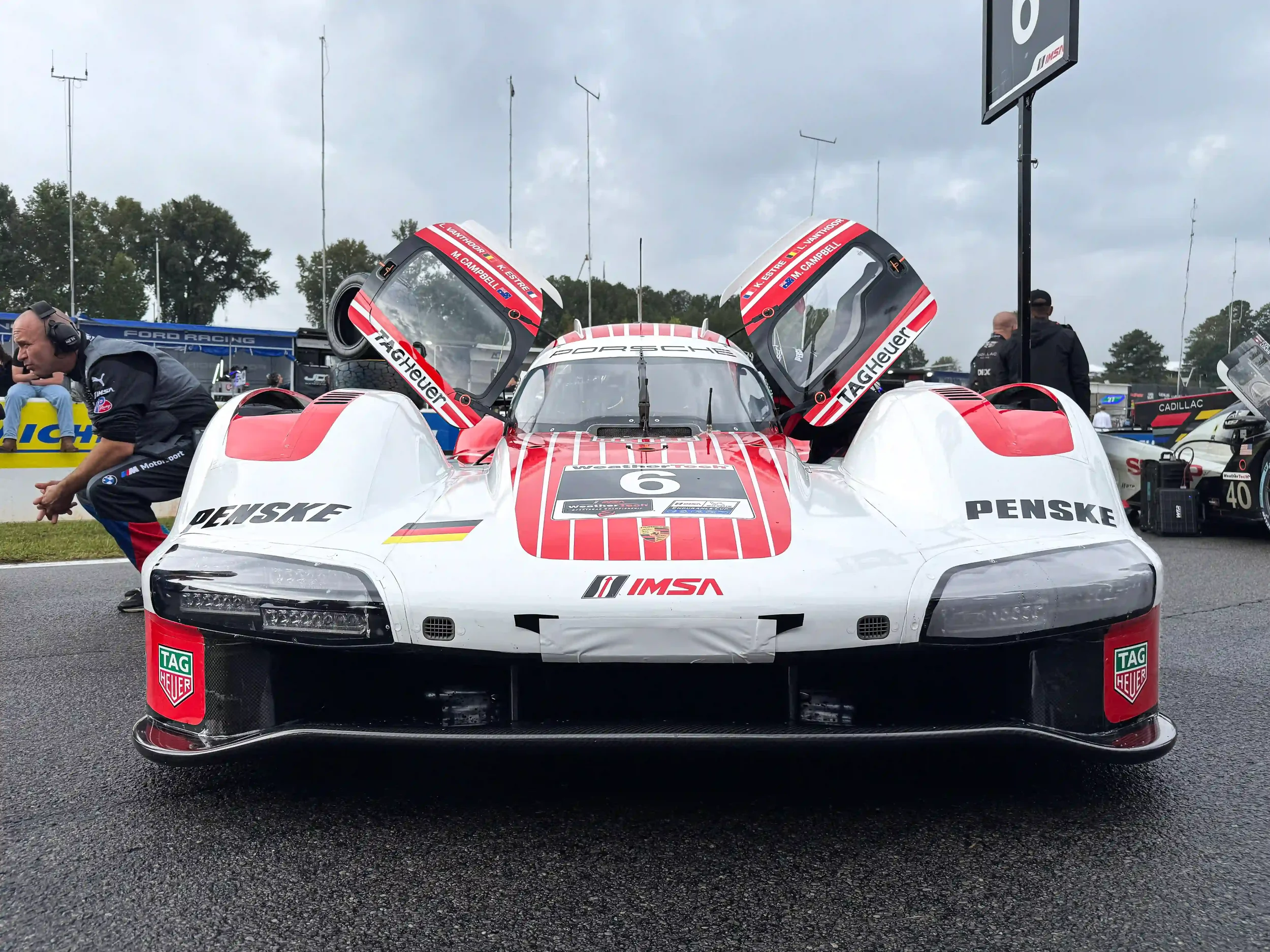
The winning Penske Porsche 963 up close before spending the next ten hours moving considerably faster than this.
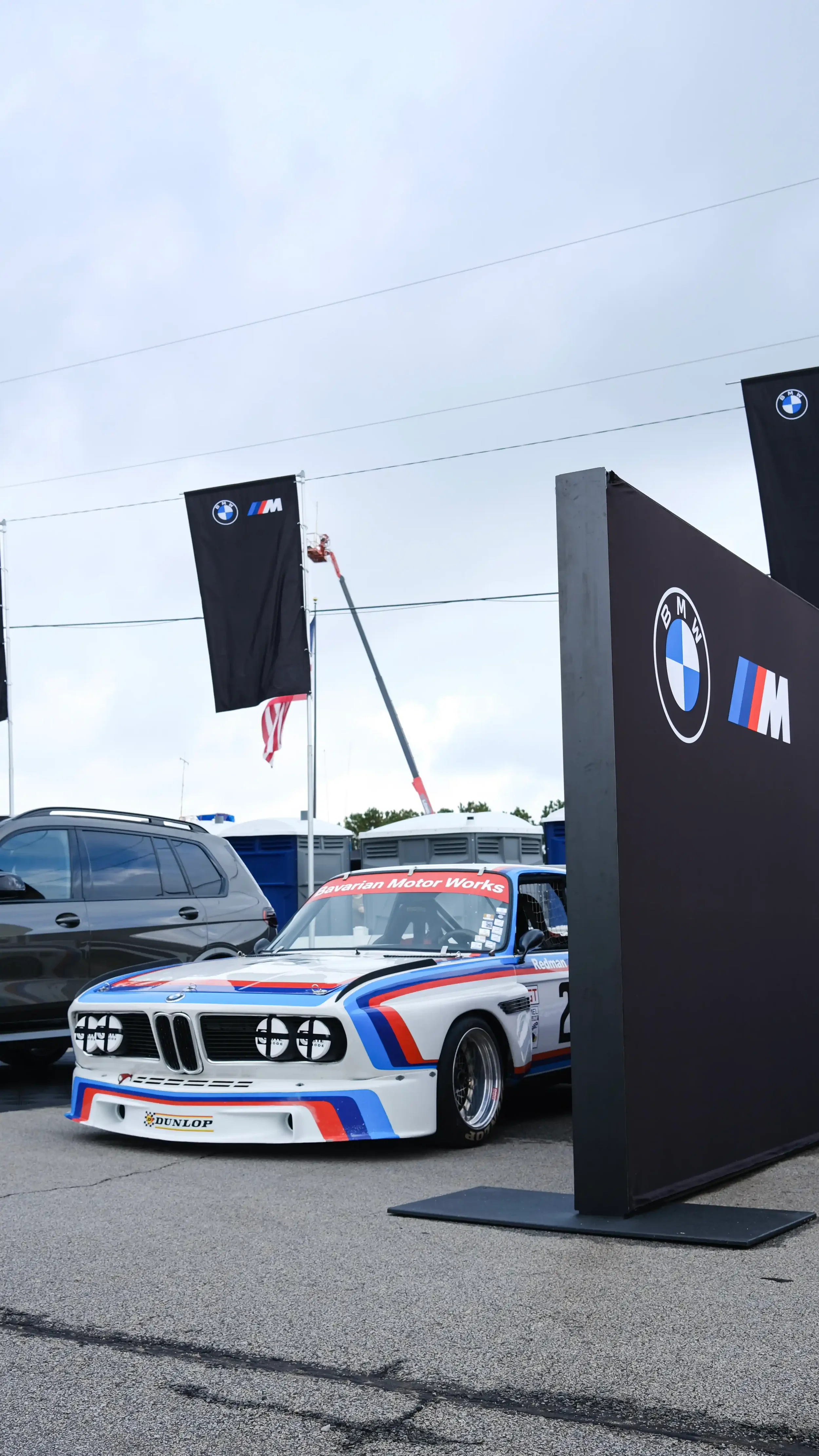
The FanZone offers a closer look a some serious vintage racers, like this 3.0 CSL Batmobile.
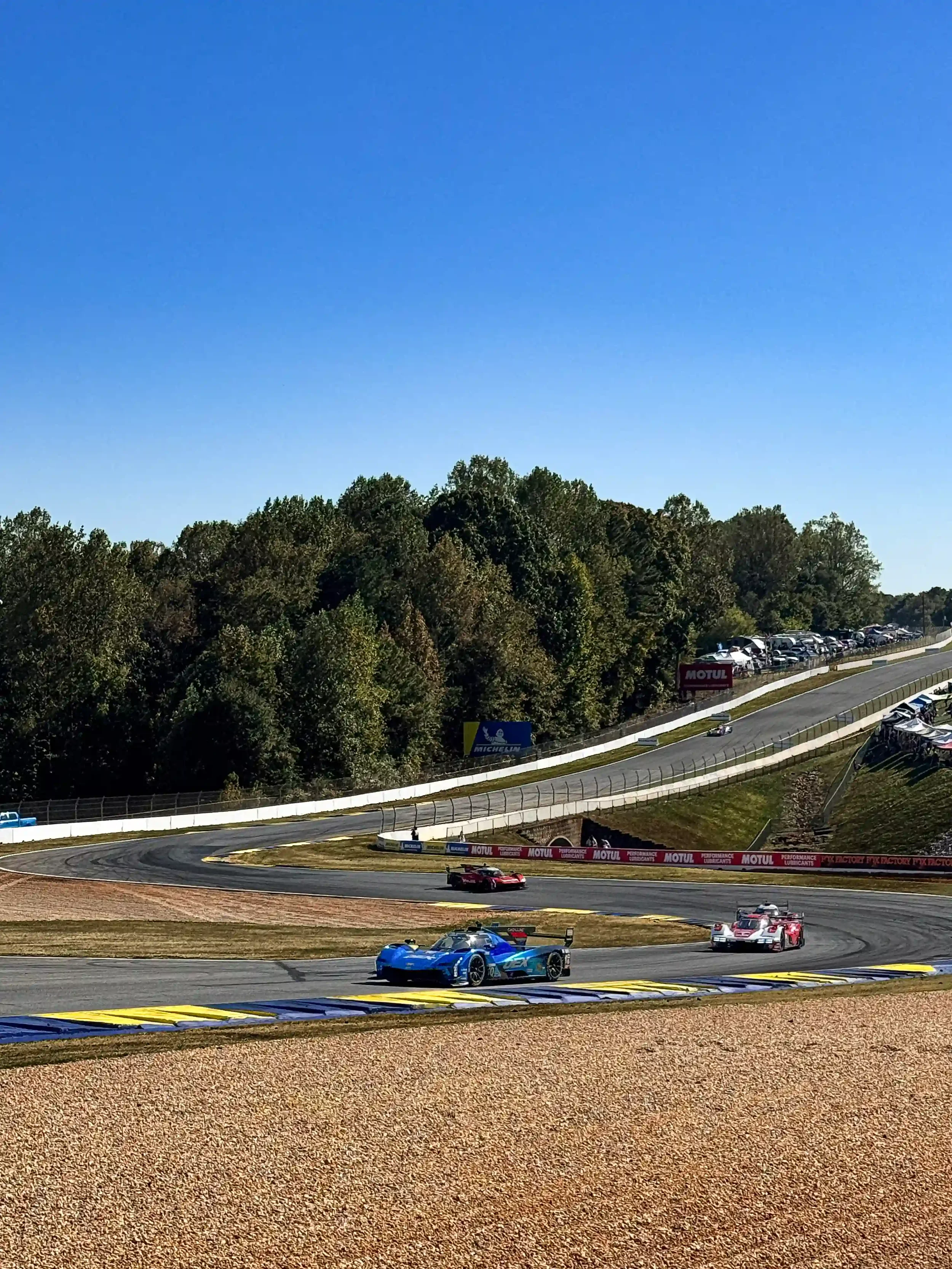
Prototypes piling through Turn 10A and 10B make it a great spot to camp out for a bit.
THE STRATEGY
This part is specific to Road Atlanta, but the general approach works at most endurance races. The goal isn’t to find the perfect viewing spot and stay there for 10 hours. Move around. Let the race change around you.
Pick two or three corners to call home. Spend some time sampling the track before deciding where you want to settle in. Turn 10A and 10B are personal favorites. Two tight corners, good views from both sides, stepped seating, and a jumbotron make it easy to watch the action without losing track of the bigger race.
Turn 7 is slower and tighter, which means you get to watch drivers pile into the hairpin, abuse the curbing, and fight for the best possible exit onto the back straight.
Then there’s Spectator Hill around Turns 4 through 6. The Esses give you one of Road Atlanta’s best views as the cars drop, climb, and change direction through the terrain. There are also food options, restrooms, screens, and a shuttle stop nearby, which becomes increasingly important around hour six.
Food: Unless you’re working with dietary restrictions or trying to save money, there are plenty of food trucks and concessions around the circuit, with many clustered near the fan zone.
Corrals and hospitality: Brand corrals can be one of the better endurance-racing hacks. Access is usually limited to owners, club members, or invited guests, but organizations like the Porsche Club of America regularly offer members perks at major races. Covered viewing, food, somewhere to sit, and a place to rest your feet without missing the race starts feeling extremely luxurious several hours in. Memberships run at $56 per year and are worth it if you attend multiple races.
Grid walk: Do this at least once. One of the things that surprises first-time endurance-race attendees is how much access you get. Before the race, fans can walk the starting grid, get close to the cars, and watch teams make their final preparations. It gets crowded. Very crowded. Still worth it.
Infield parking: If you can get it, get it. Road Atlanta is big enough that having your car inside the circuit can completely change the day. Car clubs and manufacturer groups sometimes offer paid corral parking, so it’s worth checking with local BMW, Porsche, Mustang, Corvette, and other enthusiast groups before the event.
Tickets: For your first Petit Le Mans, a one or two-day ticket is probably enough, depending on how far you’re traveling. The days leading up to Saturday include qualifying and support races, so there’s plenty to see before the main event.
Timing: Arrive early. Very early. Road Atlanta has gotten increasingly popular, and parking and prime viewing spots fill quickly. For Saturday, aim for 7 a.m. or earlier. The circuit sits off a two-lane road, so traffic gets progressively uglier the closer you get to race time.
Walk: You will walk. A lot. Road Atlanta is 2.54 miles long and has enough elevation change to make getting from one corner to another feel like part of the event. If 20,000-step days aren’t your thing, there are shuttles.
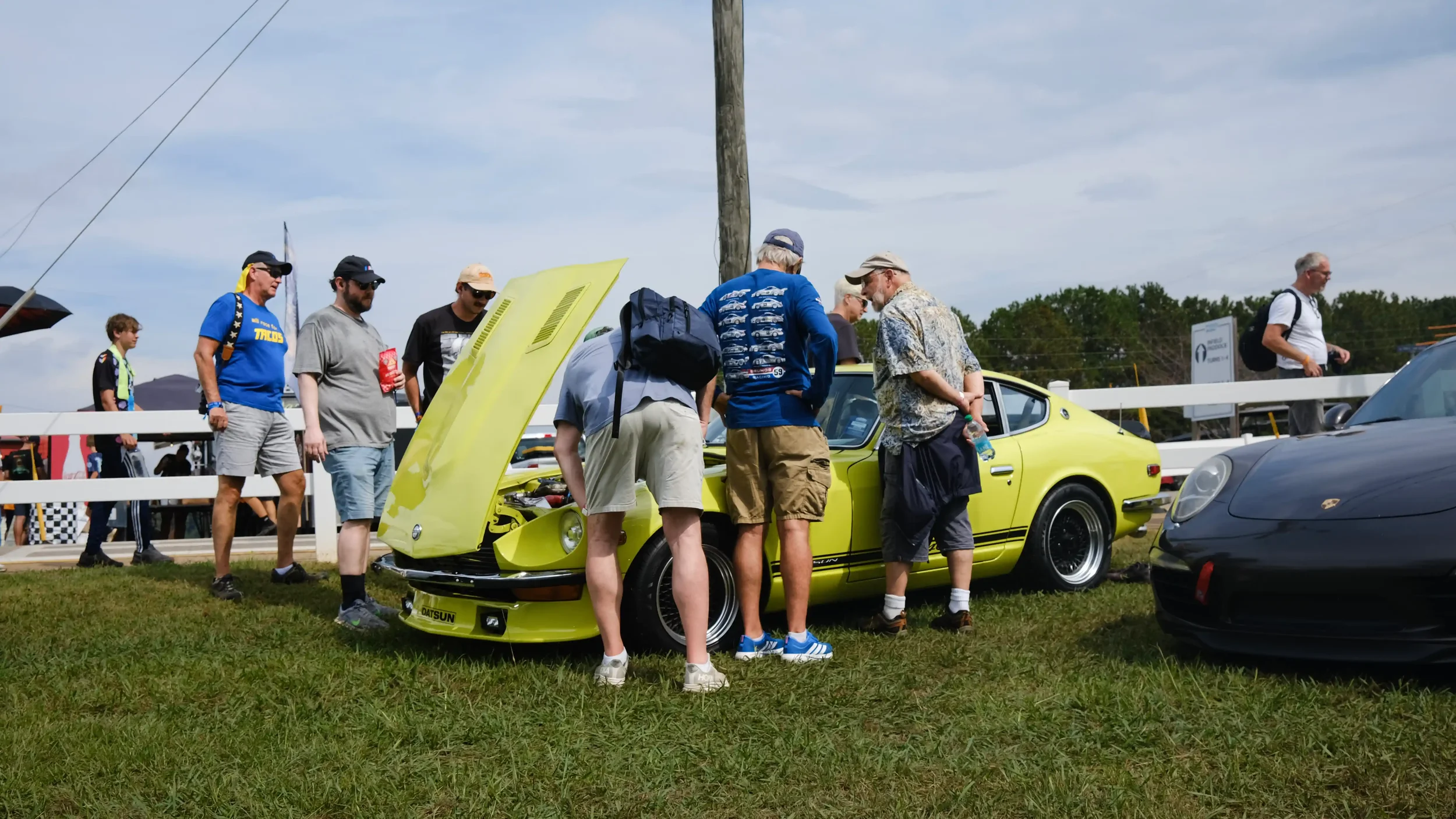
A Datsun 240Z in the infield is your reminder that the car corrals can easily eat an hour of race day.
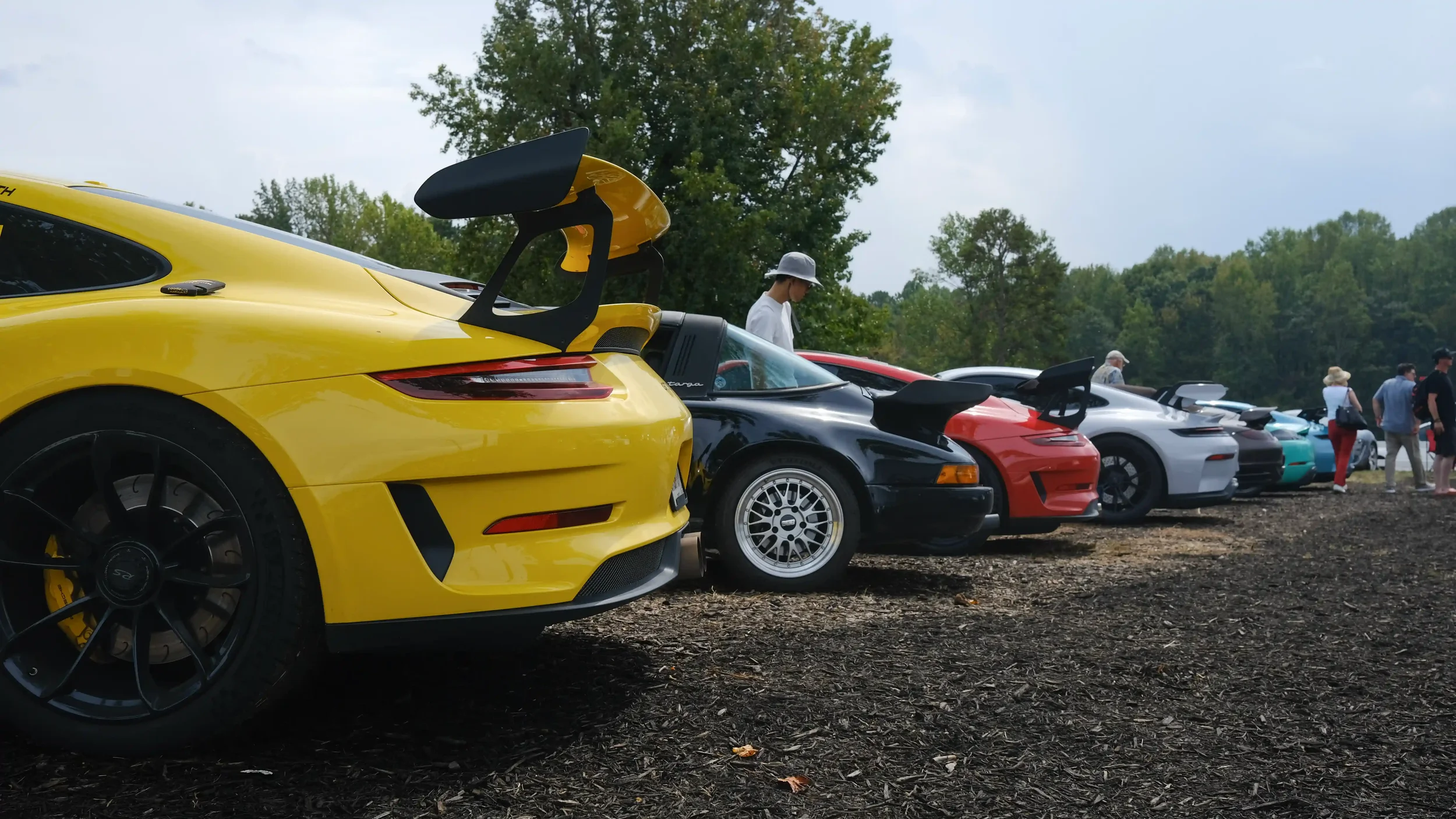
6. The Porsche corral: wings everywhere and a very efficient way to forget there’s a race happening.
THE RESULT
Endurance racing rewards effort. You have to think about where you’ll sit, what you’ll carry, when you’ll move, and how you’re going to keep track of a race that will continue whether you’re watching it or standing in line for tacos. That’s also why it gets under your skin. Over 10 hours, the race changes. Strategies fall apart. Cars disappear into garages and somehow return. Day turns into night. Headlights start cutting through the trees. That car you barely noticed at noon suddenly has a shot at winning. You get time to settle into it. And once you do, a two-hour race starts feeling short. If you’ve ever wondered whether endurance racing is your thing, Petit Le Mans is a very good place to find out.
Just bring a chair.
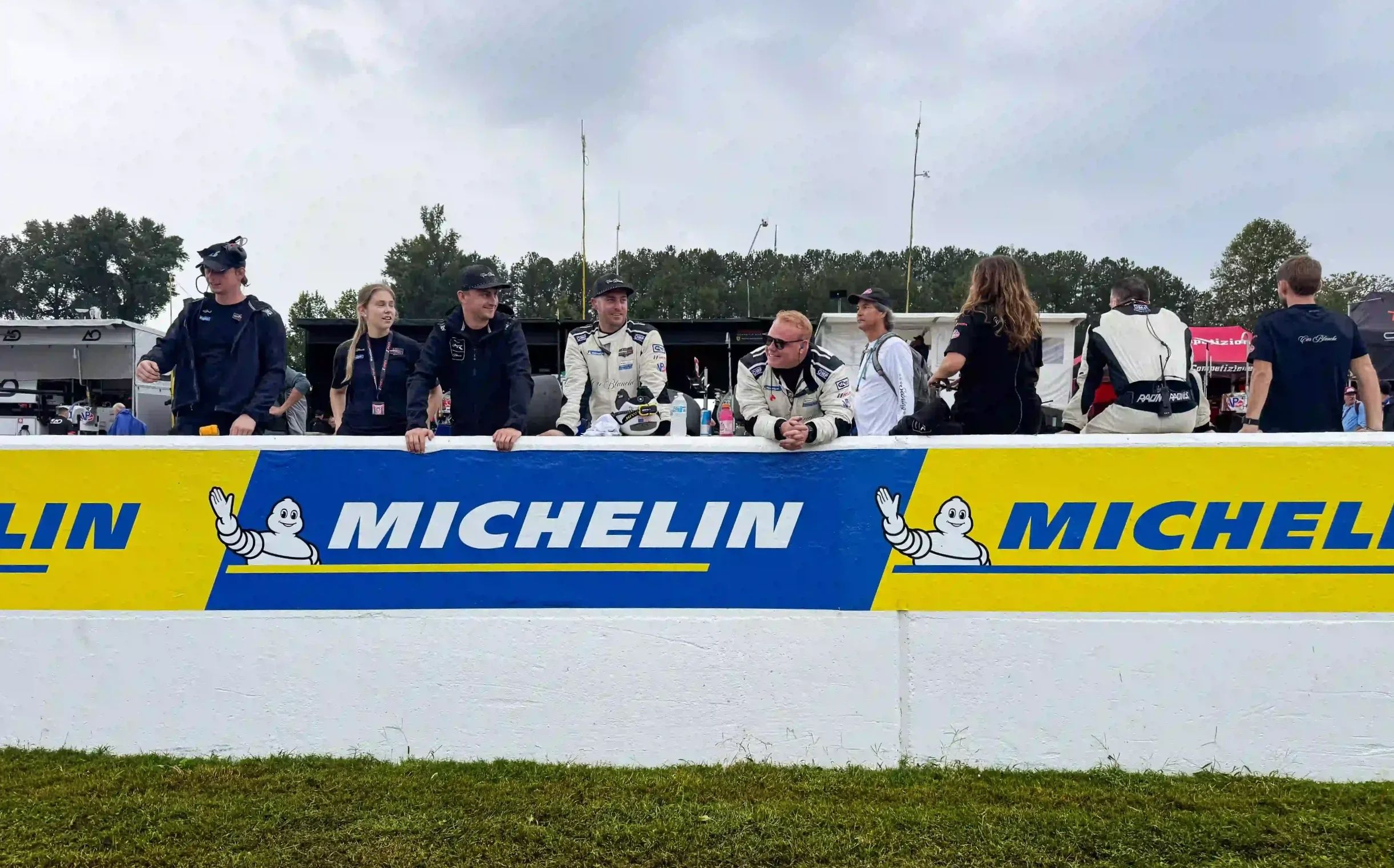
Getting this close to the drivers is one of those endurance-racing perks that still feels surprisingly accessible.
WHAT TO KNOW BEFORE YOU GO
When: Usually the first week in October
Where: 5300 Winder Highway, Braselton, Georgia 30517
Click to open in Google Maps
Price: Tickets start at around $85 – $125 for Saturday
How to get there: Fly into Atlanta, rent a car, and make the hour and a half drive to Road Atlanta.
Where to stay: High end: Chateau Elan Winery & Resort
Middle of the road: SpringHill Suites by Marriott Braselton
Hampton Inn & Suites Braselton
Inside scoop: Arrive early Saturday to avoid sitting in 2 hours of traffic moving at a snail’s pace.