
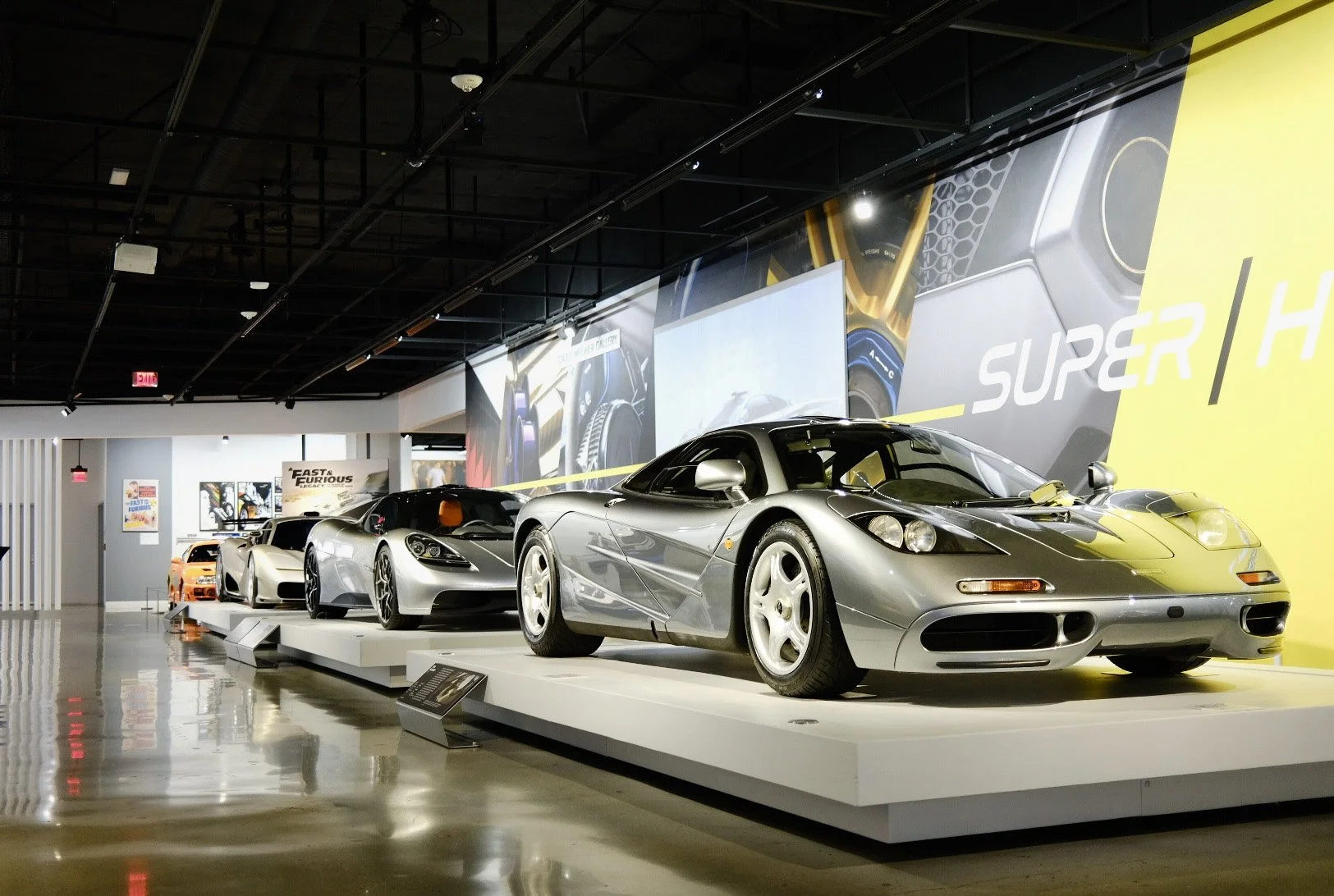
The McLaren F1, GMA T.50, and GMSV S1 LM make a pretty convincing case to clear your entire afternoon.
THE WHOLE CAR WORLD UNDER ONE ROOF
THE PETERSON AUTOMOTIVE MUSEUM
Broadly speaking, there are three types of car museums. First, you have the manufacturer museum. This is where a car company walks you through its greatest hits, conveniently skips past a few questionable decisions, and explains how it helped move the automobile forward. Then there’s the enthusiast collection. Usually started by a person, club, or small group of diehards determined to make sure the world understands why some deeply specific make or model deserves your attention. These are often the most charming because the people involved know everything. Finally, there’s the collection-turned-foundation museum. The kind that begins when someone realizes they own enough significant machinery to constitute a public service. Suddenly, Frederick Irongmonger IV’s 12 Le Mans-winning Ferraris have educational value.
Whatever the origin story, car museums are generally a net positive. More old machinery preserved means more opportunities to stand six inches from something you’d normally only see behind a velvet rope. Still, most leave you with the same unresolved feeling. You came to understand the automobile, and instead you got one version of it. The Mercedes-Benz Museum in Stuttgart gets close to the bigger picture, mostly because Mercedes has the unfair advantage of being there at the beginning. Across nine levels, it can start with the birth of the automobile and keep going through road cars, commercial vehicles, racing, safety, and more than a century of engineering. It’s an incredible history lesson, but naturally, it’s still Mercedes telling the story.
The Petersen works differently. It has enough range to bounce from high culture to low culture without treating either as an afterthought. A priceless coachbuilt Bugatti can share a building with something that jumped a bridge in 2 Fast 2 Furious. Neither feels like it wandered into the wrong museum. That’s what makes the place so good. You start looking at cars you already know and leave caring about something you didn’t.
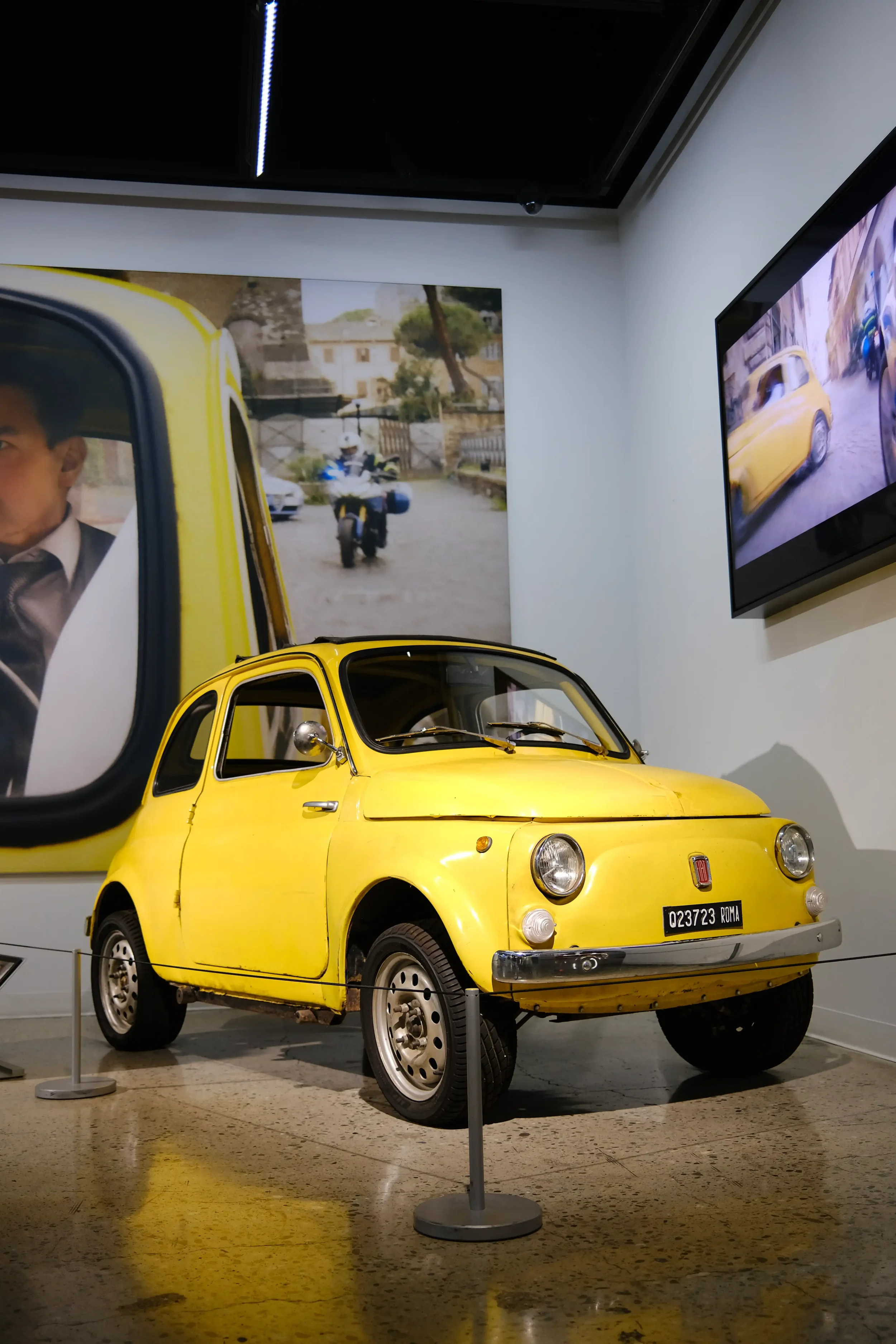
One of the many picture cars on display, this Fiat 500 was built for Mission: Impossible:Dead Reckoning and sent drifting through the tight streets of Rome.
The museum opened in 1994, founded by publishing giant Robert E. Petersen and his wife, Margie, with the goal of exploring the automobile’s place in American life. In 2015, the former department-store building at Wilshire and Fairfax was transformed into the giant red-and-silver thing that now looks like a Hot Wheels car design by Frank Gherry on too much cough medicine. Inside, the museum uses rotating exhibitions to keep the story moving.
There isn’t another car museum where you can inspect Suki’s bright-pink Honda S2000 from 2 Fast 2 Furious, then walk a few galleries over and find yourself counting the whaling on the corduroy seats of a Lancia Stratos.
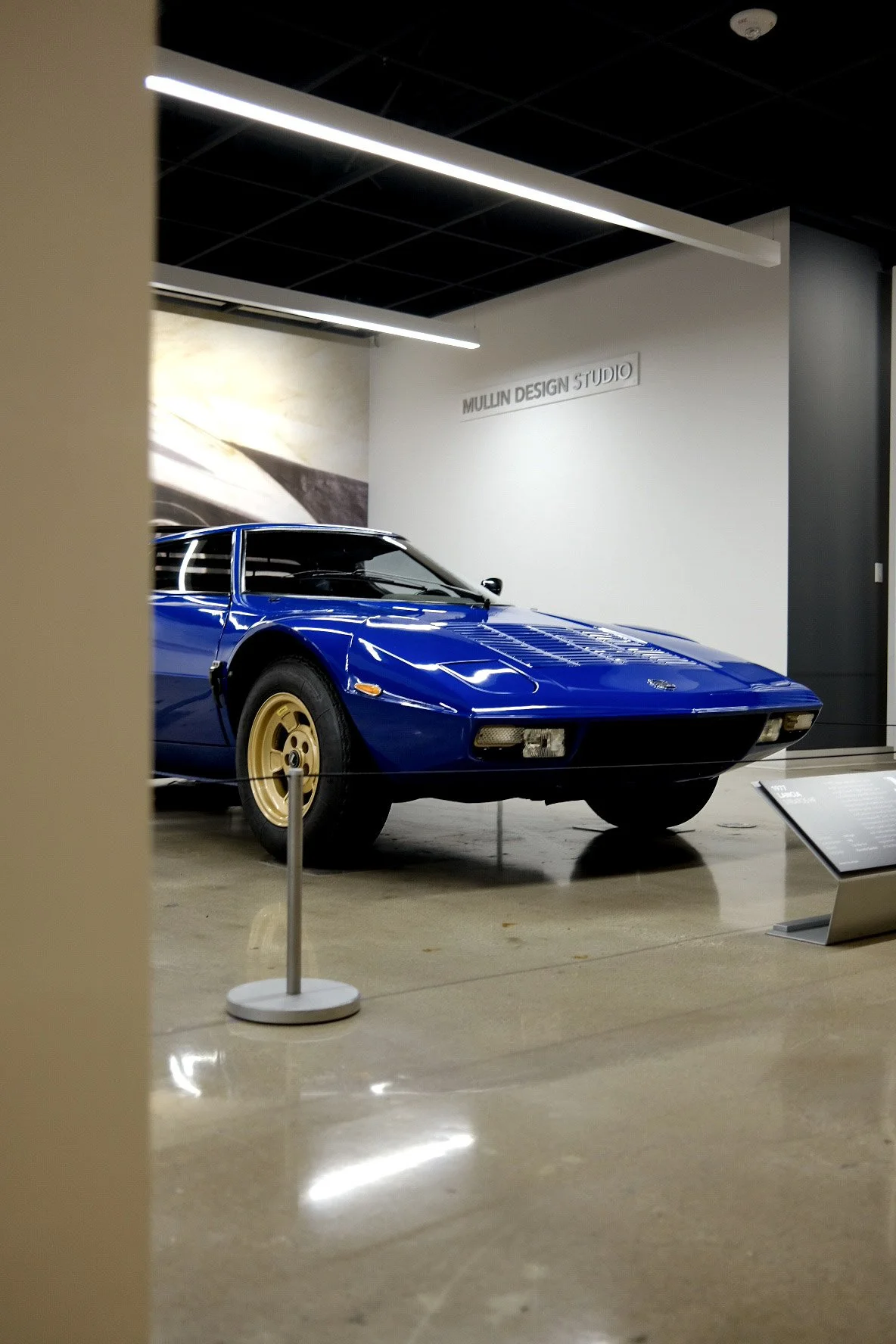
The Lancia Stratos is Marcello Gandini doing what Marcello Gandini did best: making wedges look outrageous.
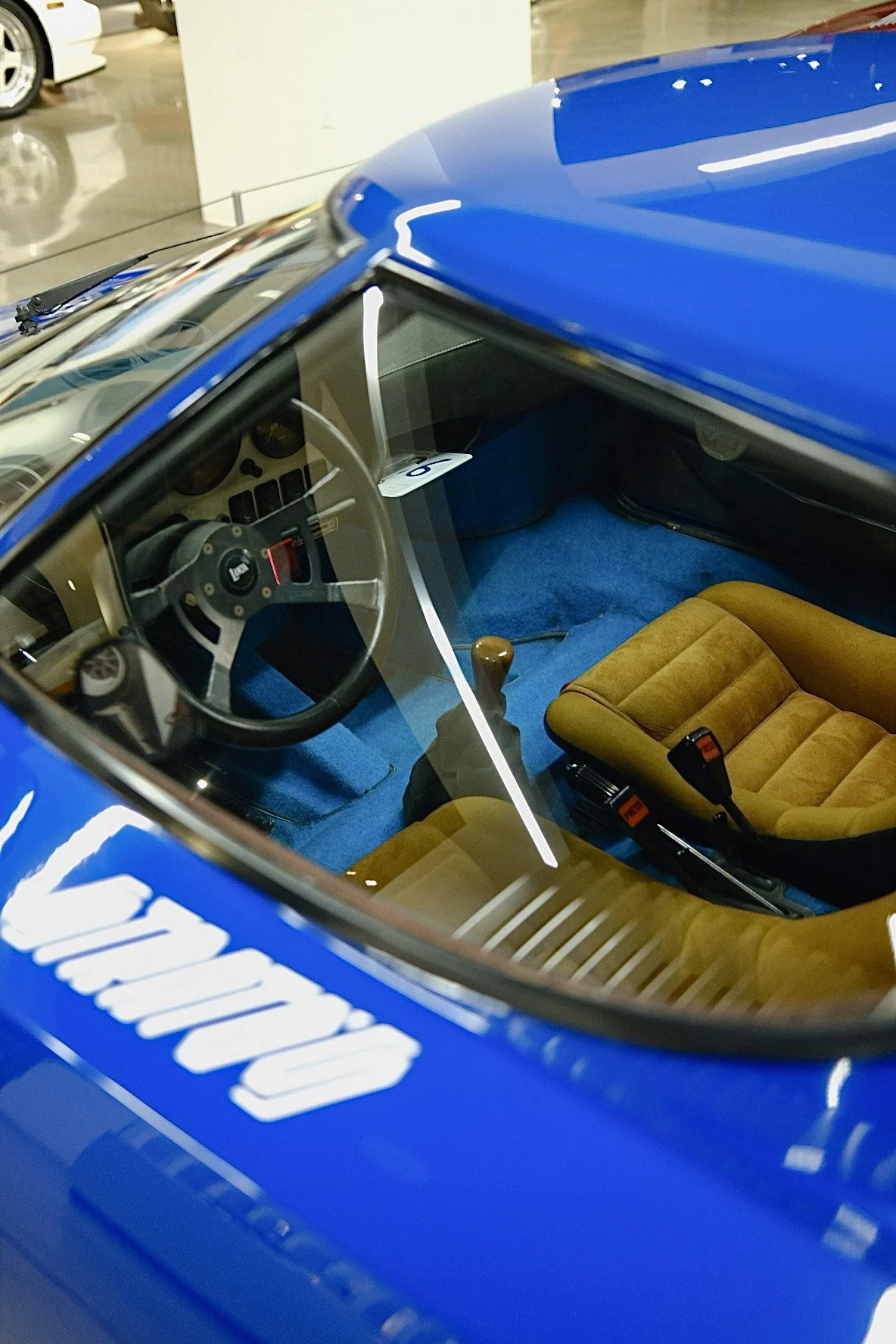
Inside, the Stratos somehow gets even better, thanks to enough corduroy to upholster a 1970s living room.
The Petersen manages to offer something for people who couldn’t tell a camshaft from a driveshaft without watering things down for the hopeless car nerds who know exactly where VTEC kicks in on every Honda from the 2003 model lineup. Movie cars help. So do the race cars. So does the truly strange stuff. The permanent Cars of Film and Television gallery gives casual visitors something instantly recognizable, while the rotating exhibitions can move from land-speed records to autonomous vehicles, motorcycles, Italian coachbuilding, or whatever other corner of automotive history deserves floor space that year. It’s a clever balance. Your significant other gets to see a car from a movie they like. You get distracted for 25 minutes by a suspension upright. Everybody wins.
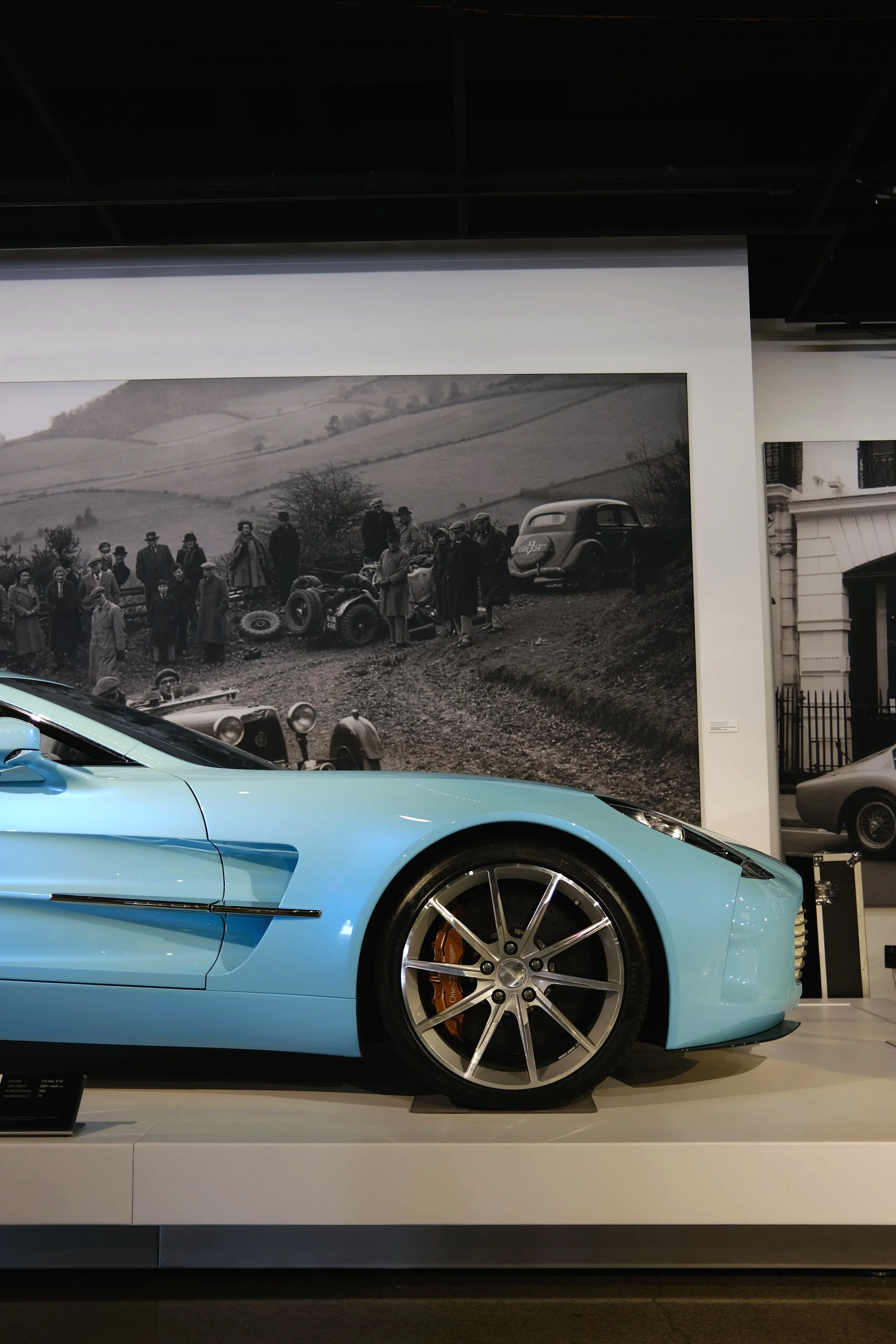
An Aston Martin One-77 is rare enough. Finding one in baby blue makes this one even harder to ignore.
More importantly, the exhibits connect cars to something beyond horsepower figures and auction values. A race car becomes part of a story about competition. A movie car shows how automotive design gets absorbed into pop culture. A prototype explains what somebody thought the future was going to look like before reality rudely intervened. That context makes you keep wandering. Then you find the stairs to the basement.
THE GOOD STUFF IS DOWNSTAIRS
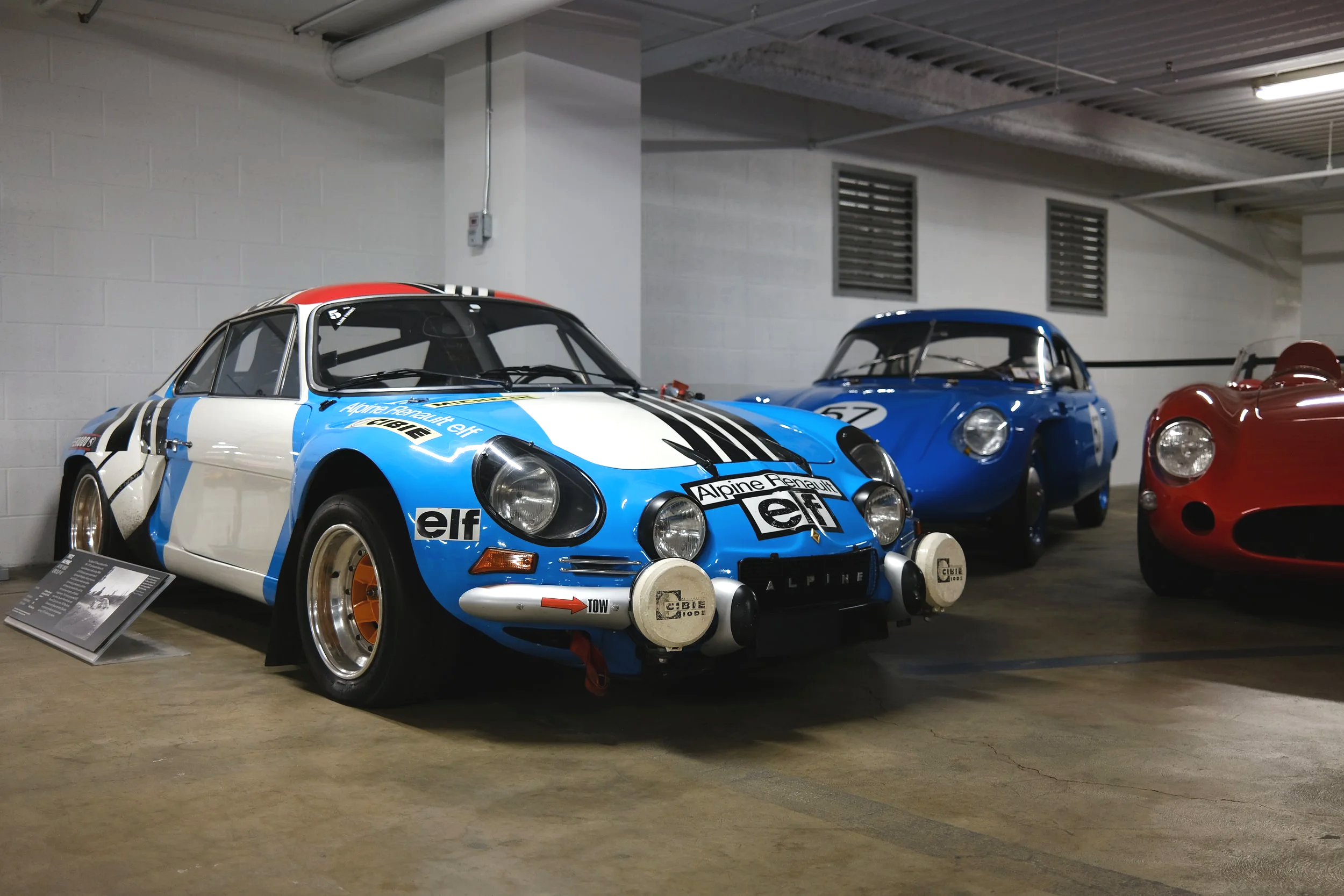
This original Alpine A110 rally car sits tucked into a corner of The Vault like it didn’t spend its youth terrorizing stages.
If the main galleries are the gateway drug, The Vault is the hard stuff. The polished displays upstairs give way to rows and rows of machinery packed together with far less ceremony. More than 300 vehicles live down there, spanning more than 120 years of automotive history.
The informality is what makes it. You can spend five minutes studying the absurd proportions of a head-of-state limousine, turn around, and suddenly find yourself looking at the Shah of Iran’s 1939 Bugatti Type 57C. The French government gave him the thing as a wedding present, because apparently a Renault pepper grinder wouldn’t do the trick. A few rows later, there’ll be something completely unrelated demanding your attention. That’s The Vault. There’s no clean narrative you’re expected to follow. You wander. Something catches your eye. You read the placard, ask a question, and 15 minutes later you know considerably more than you ever expected to about a car you didn’t know existed when you walked in.
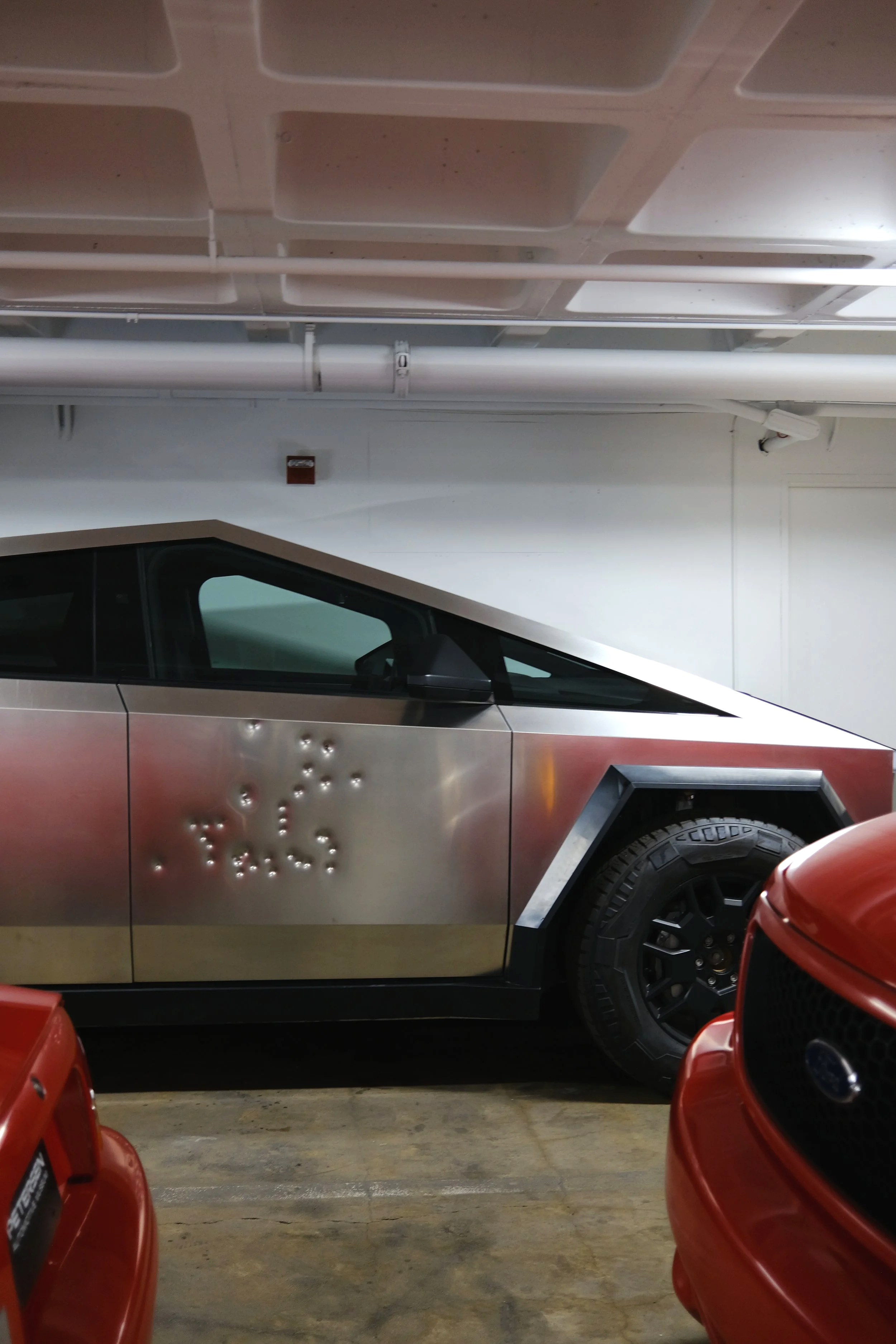
The Cybertruck prototype from Tesla’s infamous unveiling now lives in The Vault, although the smashed window has since been replaced.
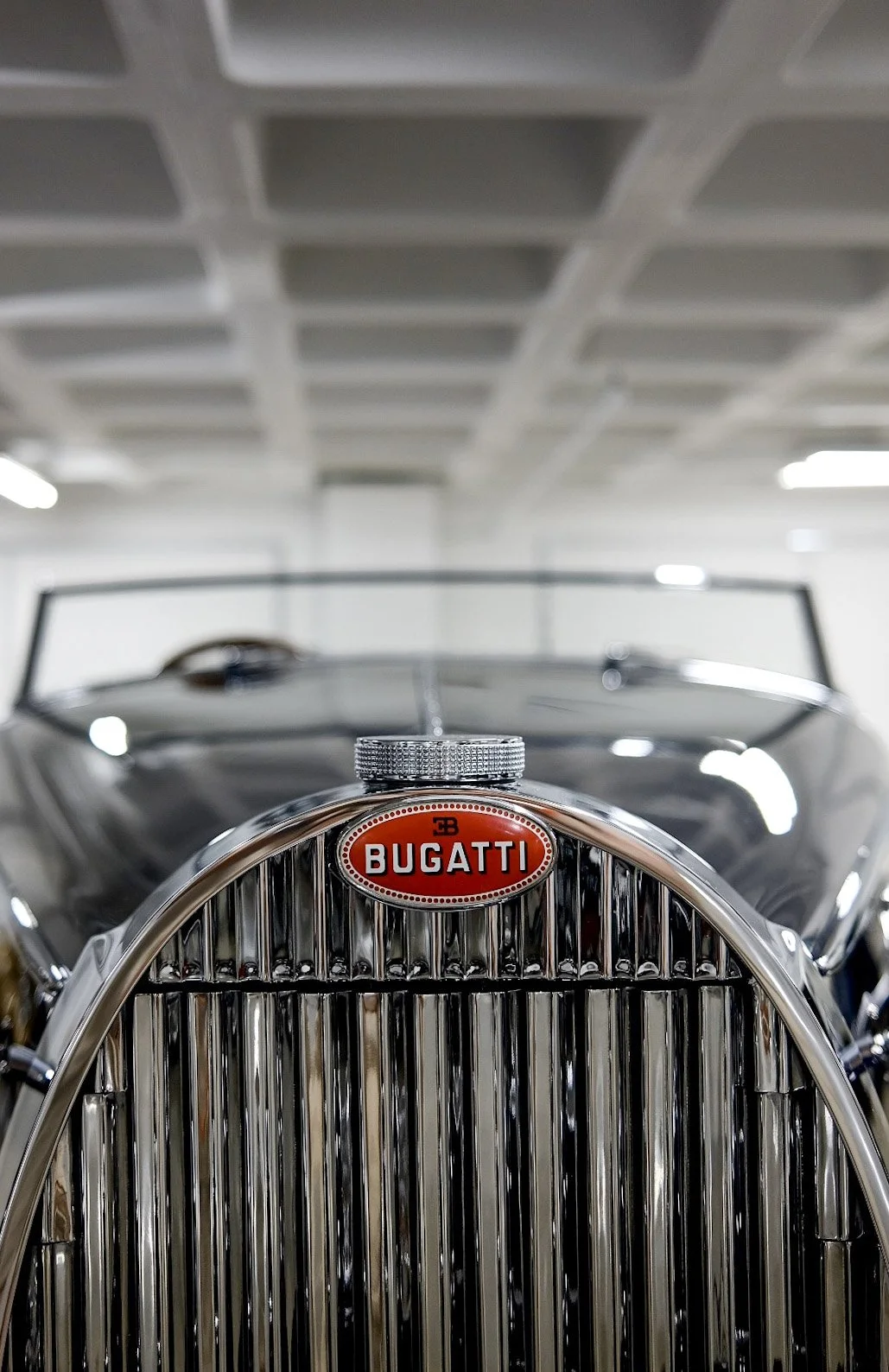
One of the many prewar Bugattis in The Vault, close enough to properly appreciate the details.
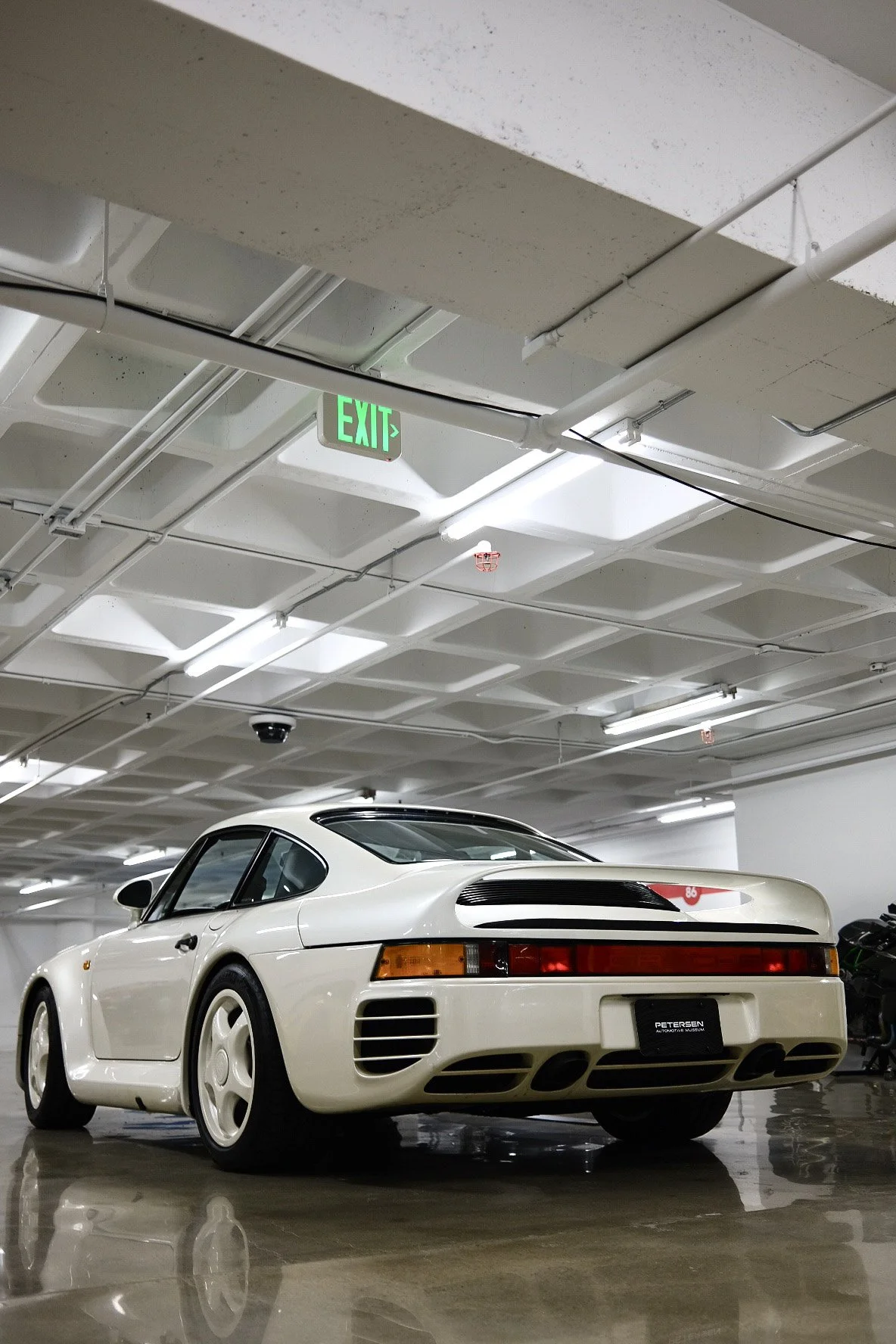
A satin-white Porsche 959 sits casually parked in The Vault like one of the most advanced cars of the 1980s is no big deal.
The volunteers make it even better. Get one talking about a particular car, and you’ll usually get the stuff that doesn’t fit neatly onto a museum placard. The strange ownership history. The mechanical quirk. Why this particular example matters. That’s when hours disappear.
Car heaven, automotive treasure chest, petrol-fueled nirvana. Pick whatever overwrought phrase makes you happy. The important part is this: Very few museums can make a McLaren F1, a prewar Bugatti, Dom’s Charger, and some deeply nerdy piece of motorsport history all feel like parts of the same story. The Petersen can. And that story is basically the automobile in full: brilliant, ridiculous, culturally important, occasionally tasteless, and endlessly interesting. Hard to fit all of that into one building.
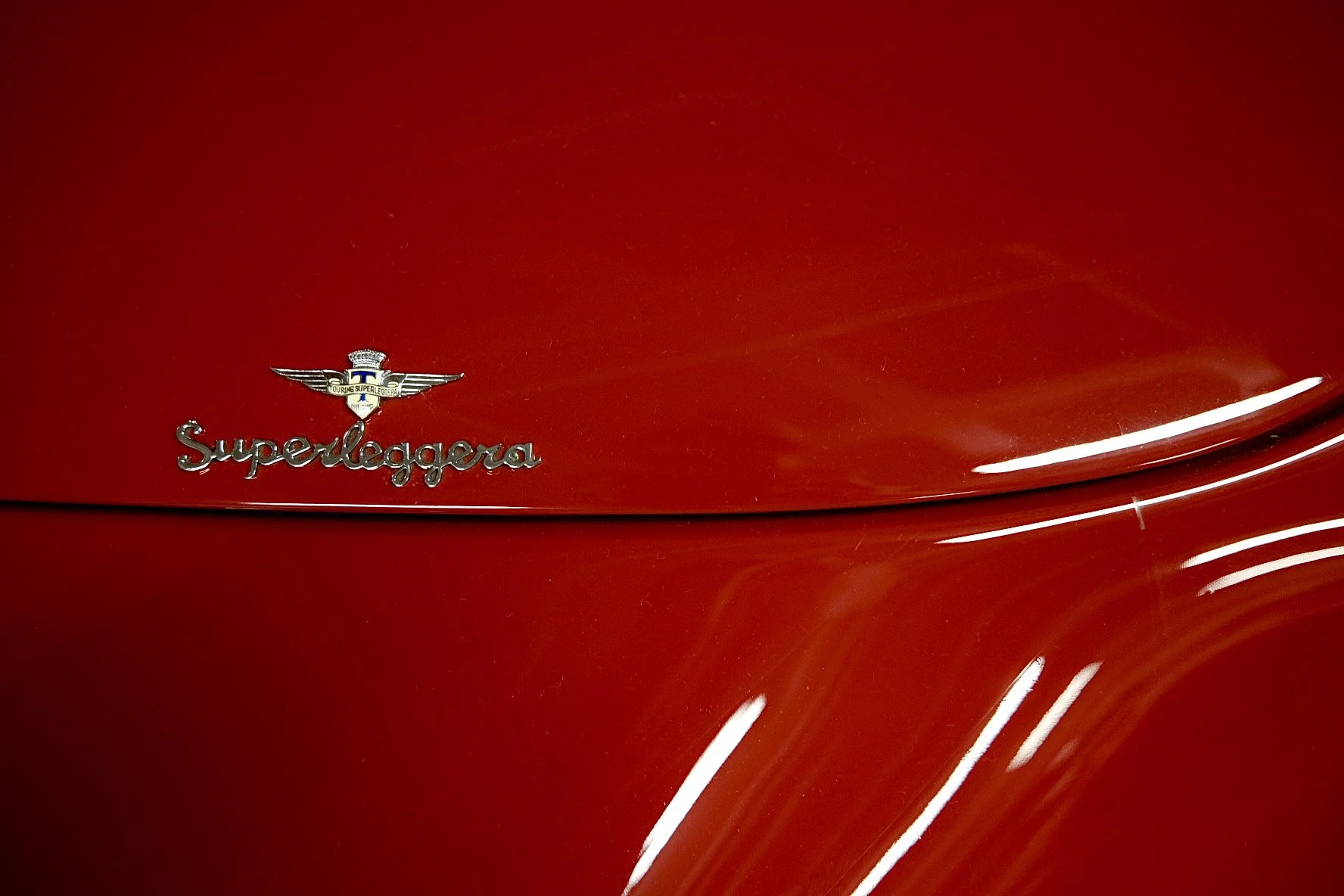
A Touring Superleggera badge is the kind of detail The Vault lets you inspect on cars you’ve probably only seen in books.
WHAT TO KNOW BEFORE YOU GO
Address: 6060 Wilshire Blvd., Los Angeles, CA 90036.
Click to open in Google Maps
Hours: Open daily from 10 a.m. to 6 p.m. Last entry to The Vault is at 5 p.m.
Parking: Nope, it isn’t included. The museum garage currently charges $18 for the first two hours, then $3 per additional hour, with a $24 daily maximum for museum visitors.
Always get Vault access: This is the easy one. More than 300 additional vehicles live downstairs, and the collection rotates. If you’ve already made it to the Petersen, don’t stop one floor short of the best part.
Use the museum guide: First visit? Pull up the Petersen’s digital museum guide as you walk around. It adds context to the cars without requiring you to read every placard like you’re studying for a midterm.
Talk to the volunteers: Seriously. Ask about whatever car catches your eye and see what happens.
Give yourself time: The museum suggests two to three hours for the regular galleries, plus extra time for The Vault. Car nerds should interpret that as “clear your afternoon.”
Go again: The exhibits and Vault cars rotate regularly, so this is one of the rare museums where a second or third visit doesn’t feel like repeating yourself.
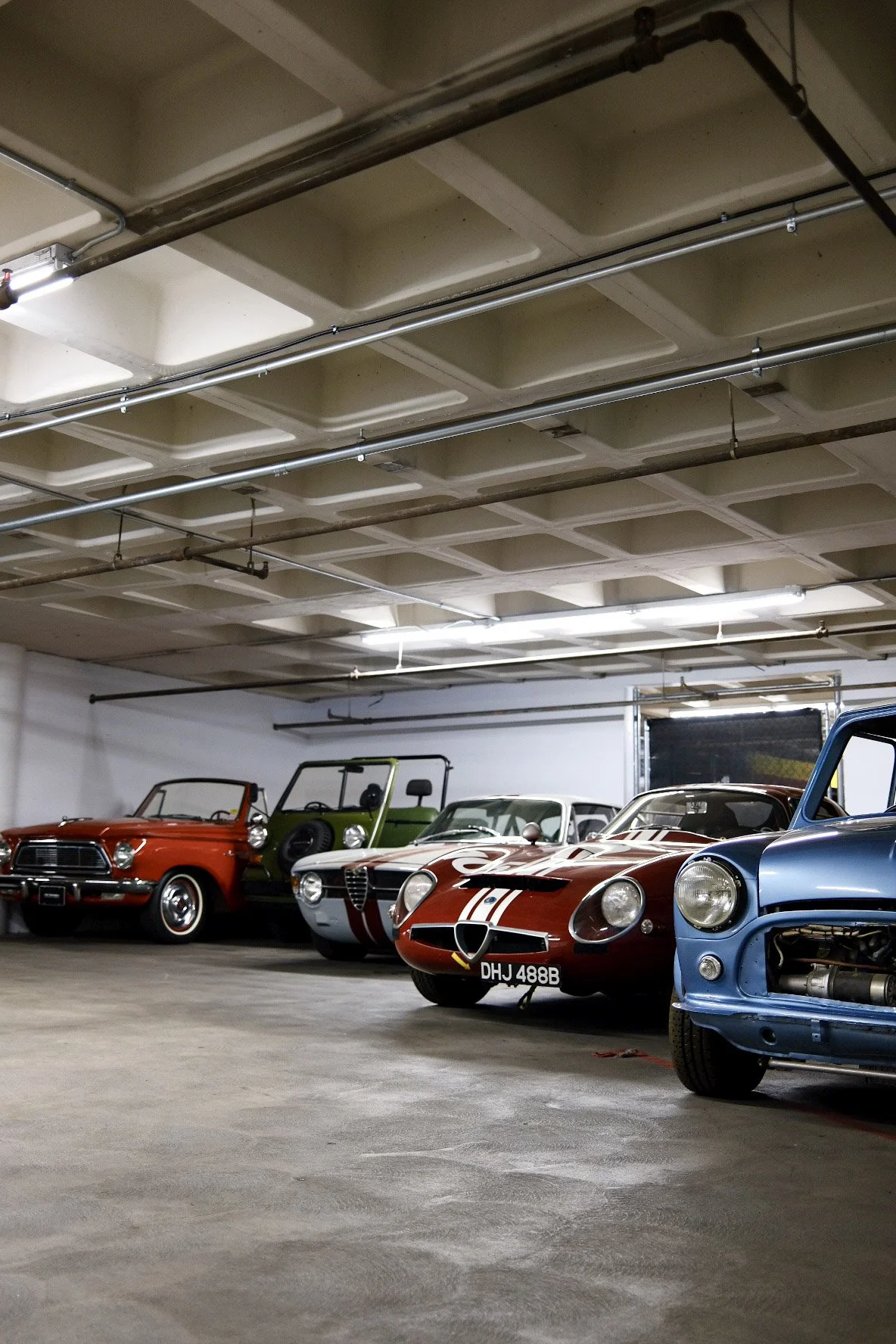
Keeping more than 300 cars in The Vault ready for their next turn on display means somebody is always wrenching on something.
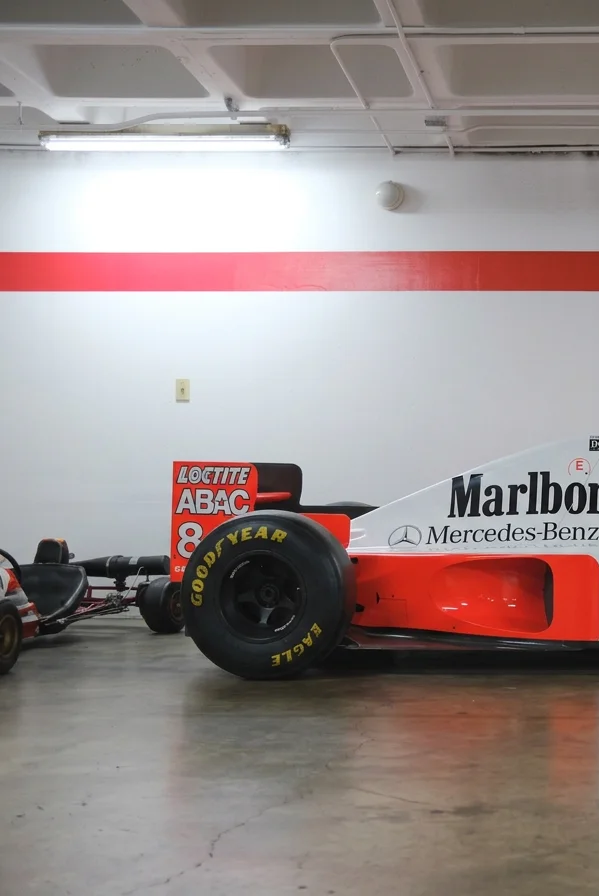
A Marlboro-liveried McLaren Formula 1 car puts one of motorsport’s most recognizable color schemes within arm’s reach.