
WHEN SWEDEN DOES EXCESS
SCANDINAVIA’S BIGGEST CAR SHOW: VALLÅKRATRÄFFEN
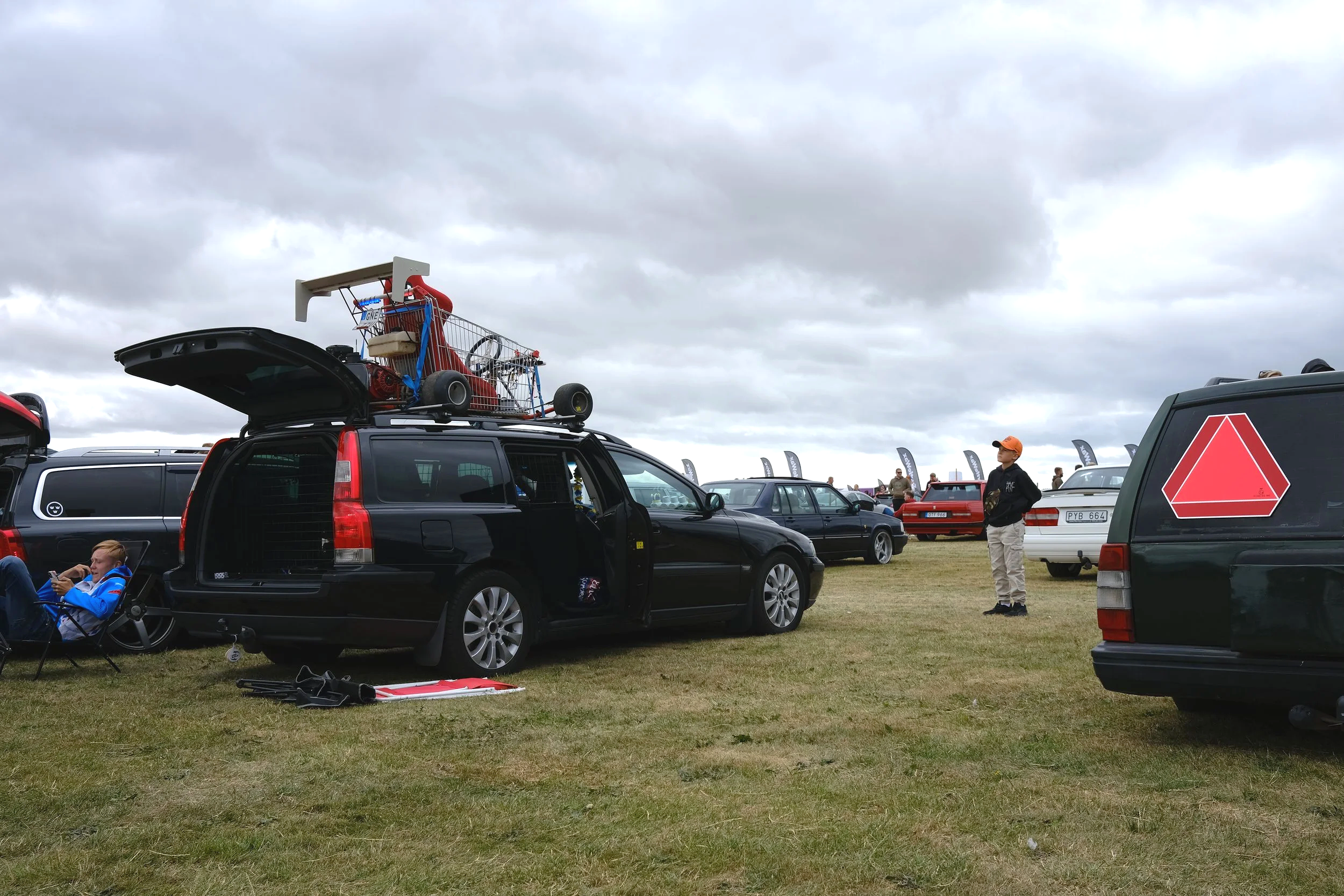
Car culture in Sweden is a funny thing. Spend a little time on Swedish roads and the average car owner seems to follow all the cultural norms you’d expect. Sensible. Understated. No need to make a fuss. Which probably explains the sheer number of Volvo V70s still roaming around.
Usually painted somewhere along the champagne-to-silver spectrum, the V70 feels like the unofficial mascot of everyday Swedish motoring. And why wouldn’t it be? All-wheel drive for winter. A drivetrain built to easily hit 300k miles. Enough room in the back for an entire IKEA showroom.Even the styling feels appropriately Swedish. Handsome enough, but nobody’s trying too hard—no screaming eagle decals needed, friend. We’ve got everything we need.
That’s the surface, anyway. Spend a little more time around Swedish car people and things start getting weird. Not gradually, either. You only have to scratch a few centimeters below that Scandinavian sensibility before somebody appears with a Volvo wagon sitting three millimeters off the ground and an angle grinder in their hand.
For the full experience, go to Vallåkraträffen. Held every August outside of Malmo in southern Sweden, Vallåkraträffen is billed as Scandinavia’s largest car meet. It’s also what happens when thousands of Swedes gather in a field and see just how far they can stretch Scandinavian sensibility before it snaps, sometimes literally. And this is where the layers of Swedish car culture start revealing themselves.
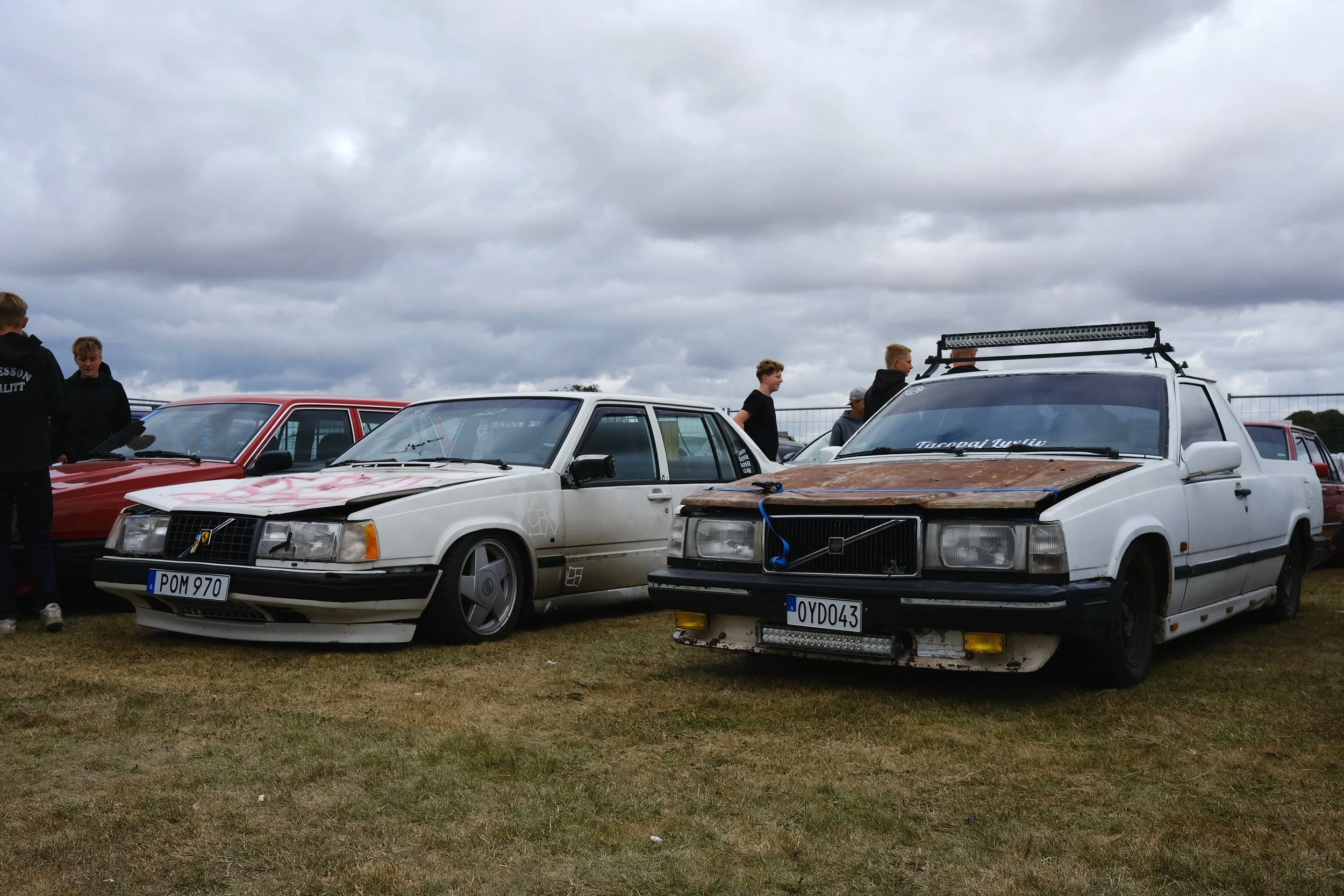
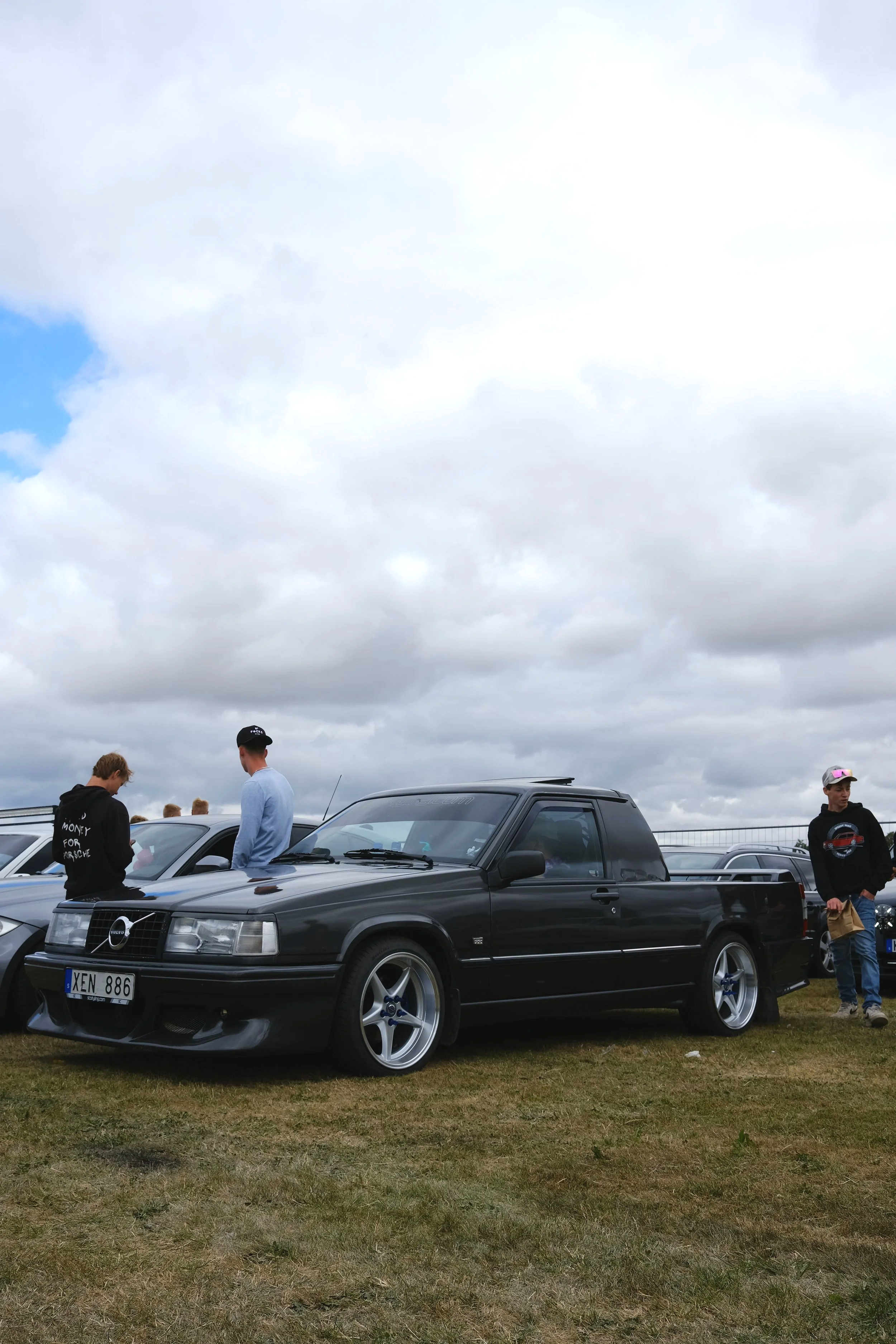
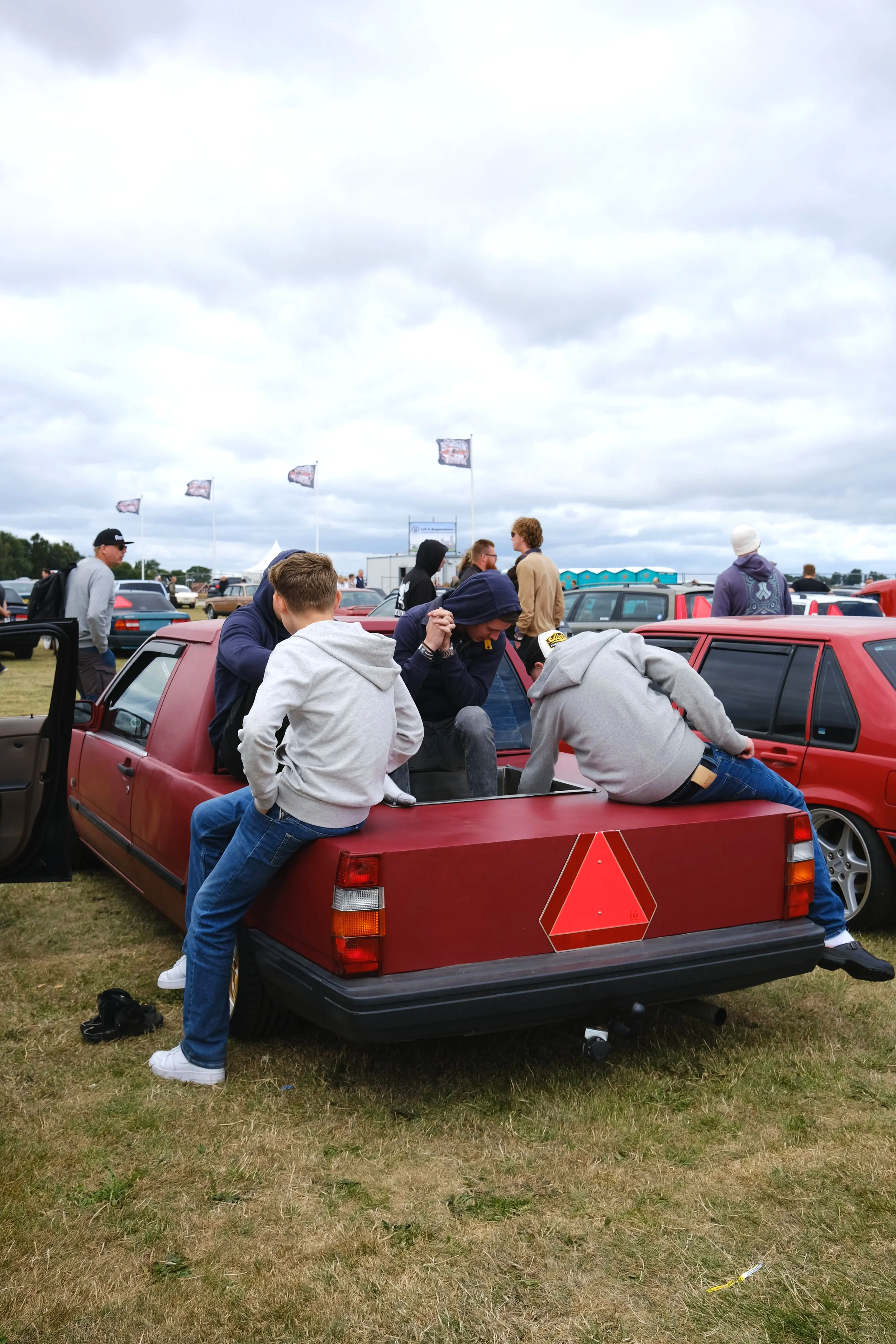
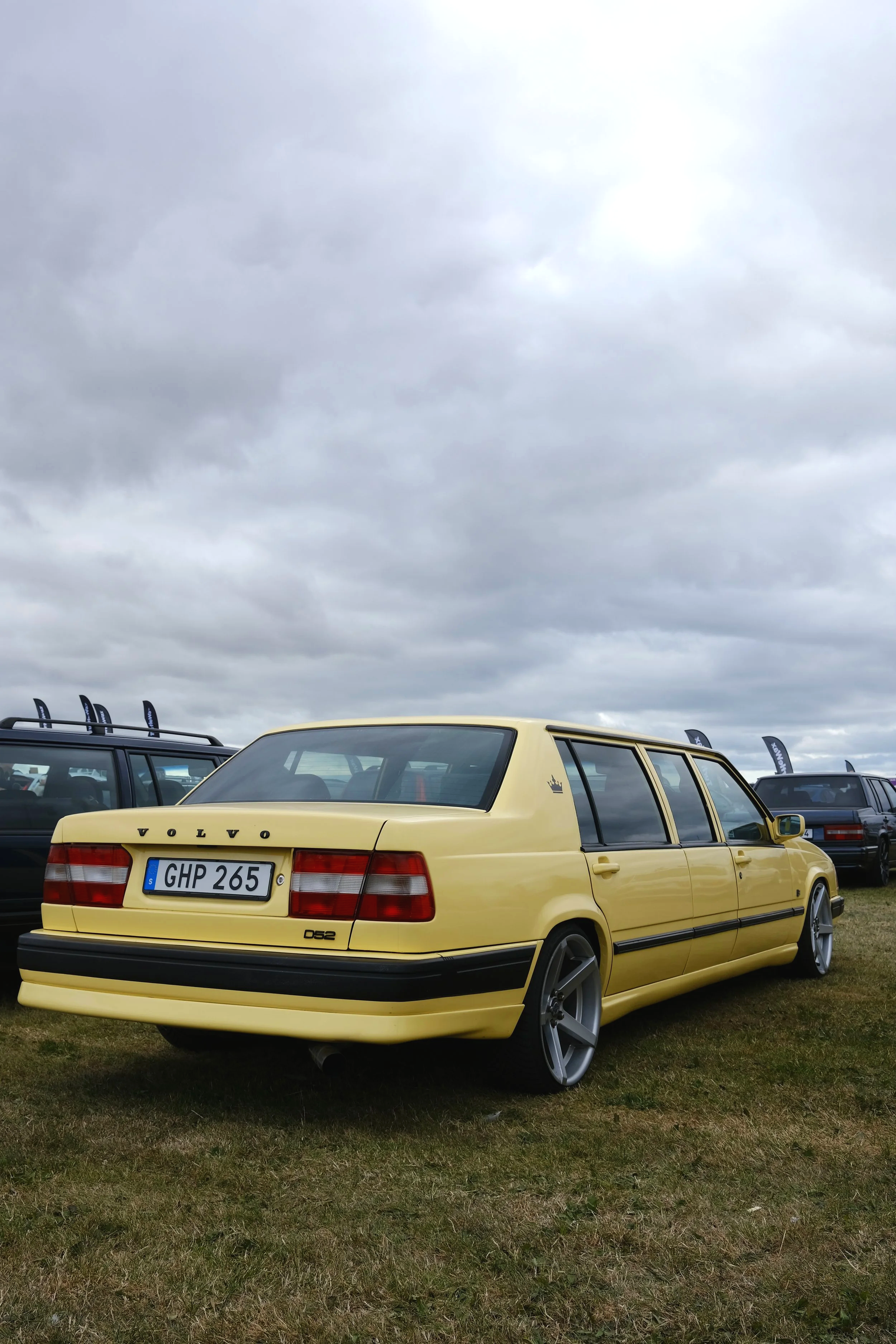
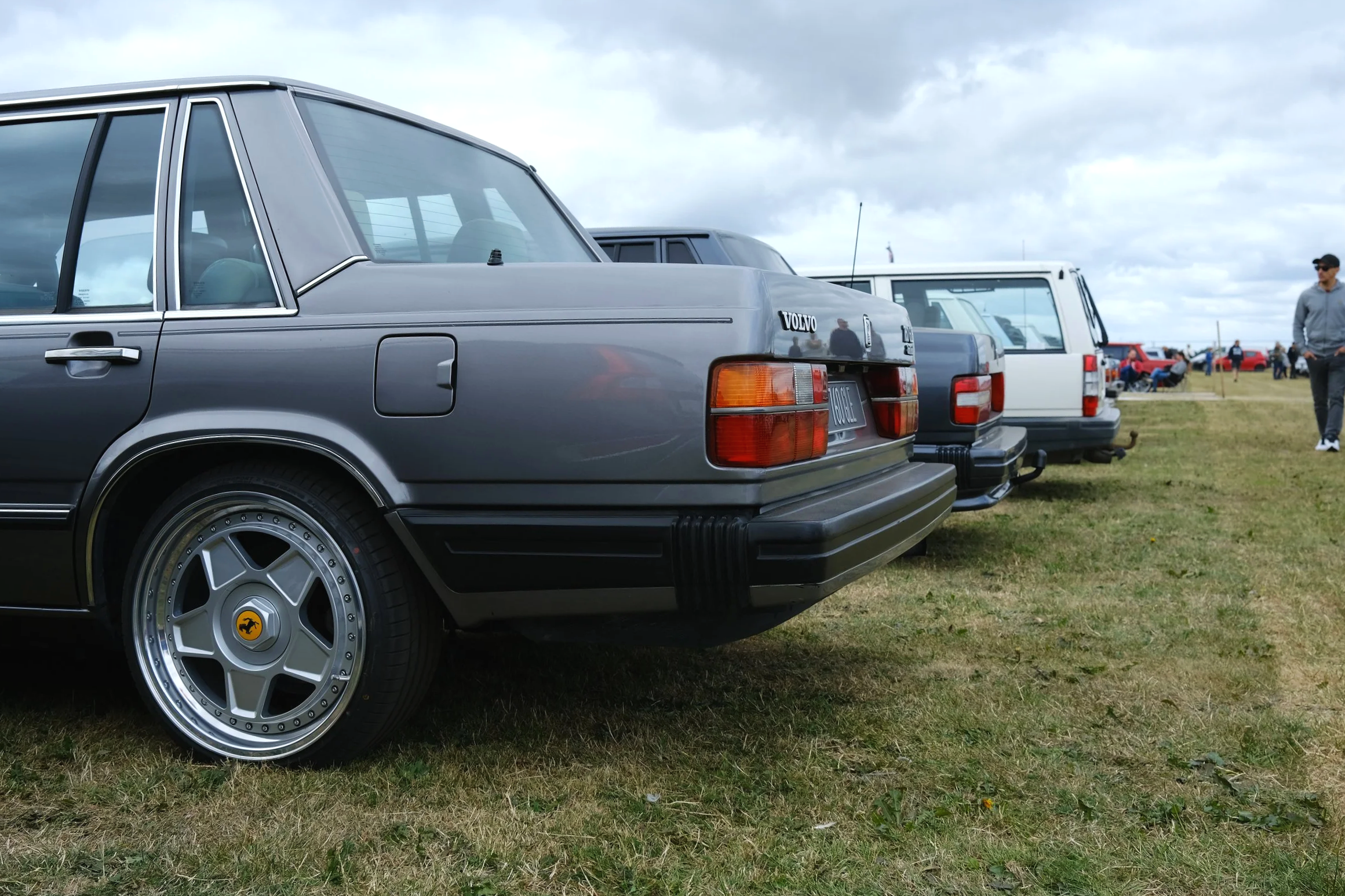
First, the Volvos. In America, the person who can identify the difference between a 240 GL and a 240 Turbo from 100 yards away occupies a fairly specific corner of car culture. In Sweden, that knowledge comes with a little national pride. It makes sense. Americans have Ford and Chevy. Germans have BMW and Mercedes. Sweden has Volvo and Saab, and people here treat them accordingly. The younger crowd shows its affection for their national marques differently. Rows of old Volvos have been chopped, slammed, widened, turbocharged, and modified to within an inch of becoming lawn furniture. The sensible Swedish family wagon becomes a blank canvas for seeing just how unsensible you can make it. One of my favorites was a 240 wagon with most of the rear roof cut away, effectively turning Volvo’s famously practical long-roof into a two-door ute with what looked like a conversation pit carved into the back. Finally, a Volvo designed specifically for sitting around and drinking cider. You get the sense that taking something as fundamentally responsible as a 240 and doing something deeply irresponsible to it is half the fun.
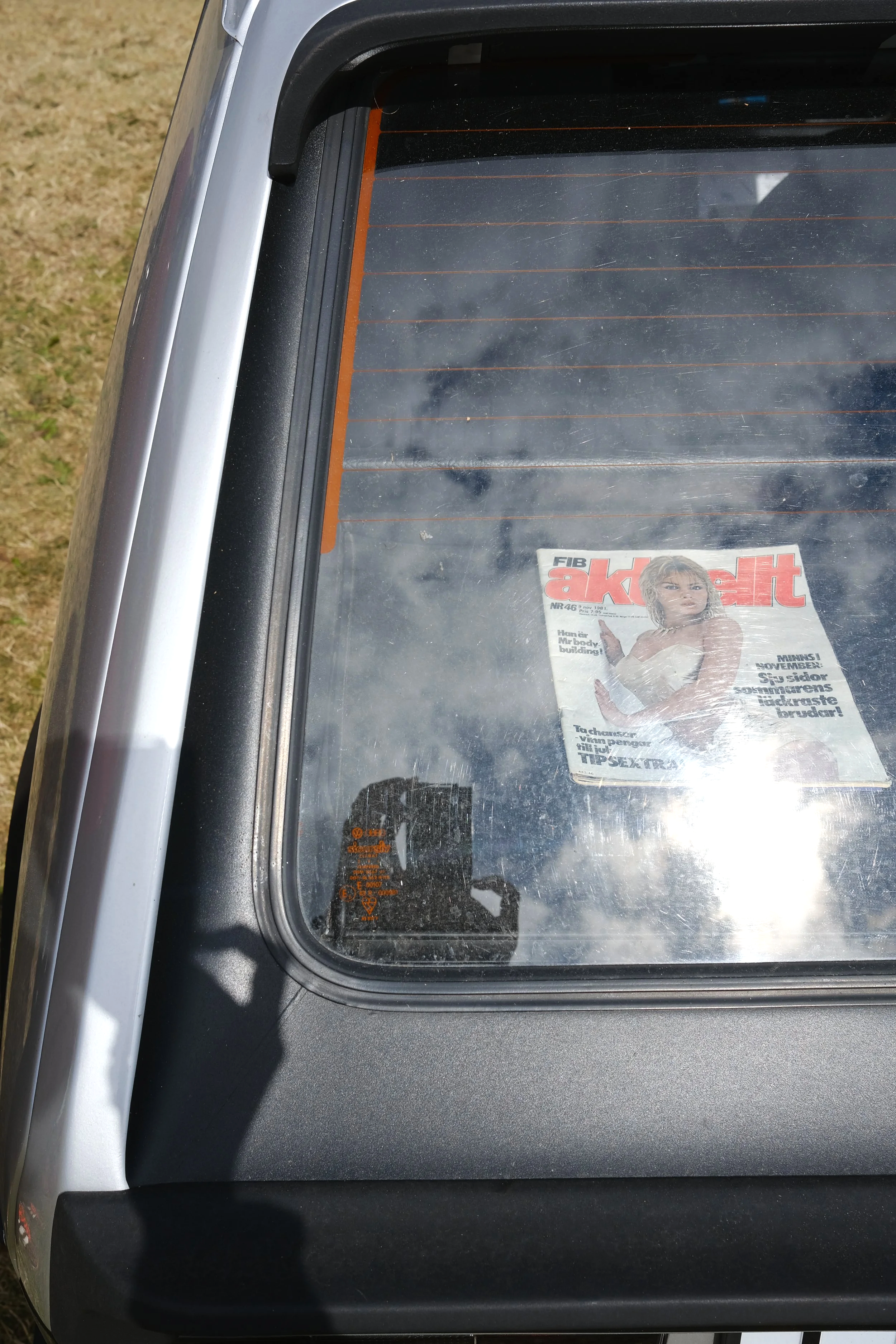
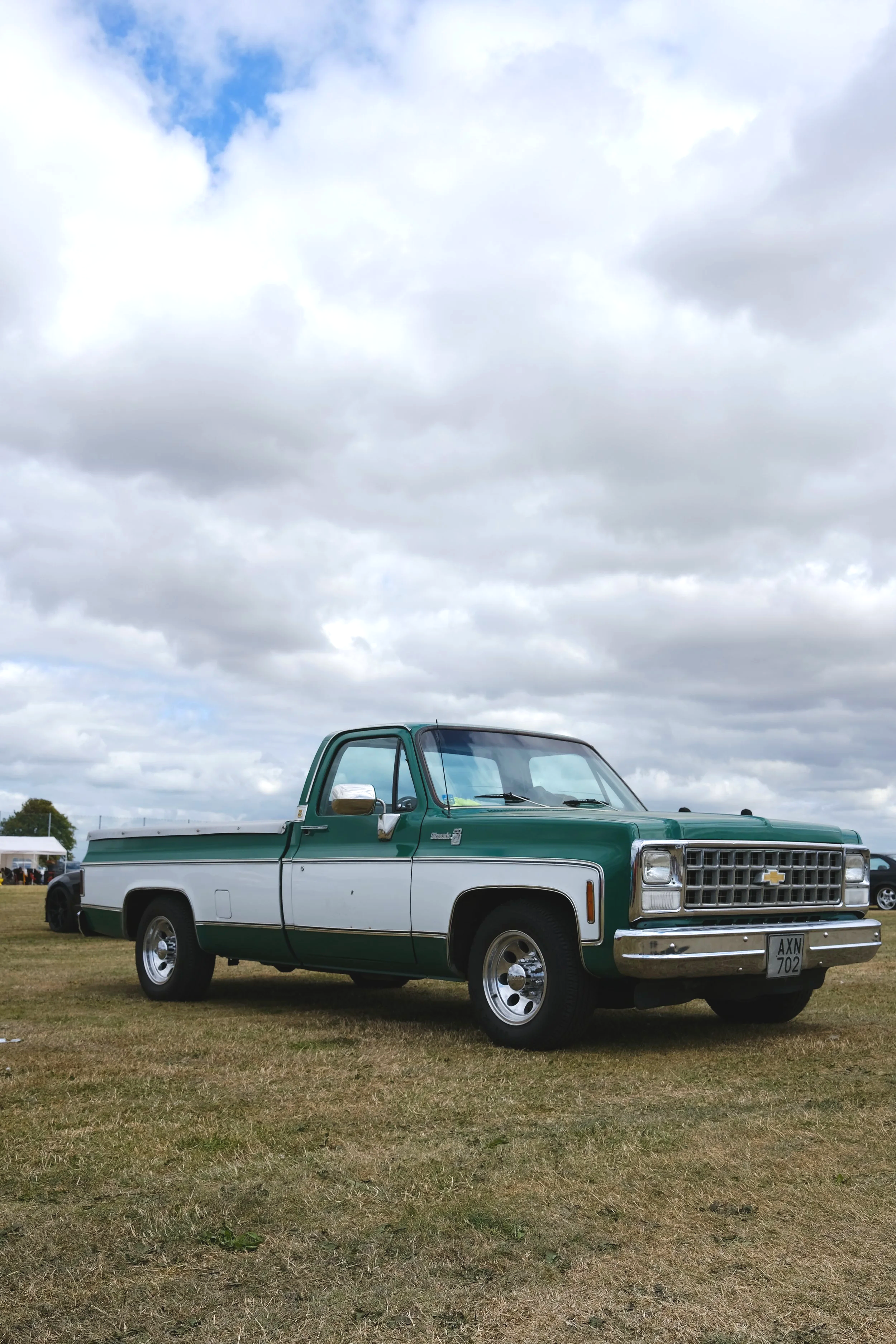
Then you walk a few rows farther and Sweden gets even stranger. Fin-tailed Cadillacs. Pristine Chevy Pickup the size of a Stockholm apartment. Suddenly you’re standing in a scene from American Graffiti, except everyone is speaking Swedish and the nearest In-N-Out is several thousand miles away. Welcome to the world of the raggare. Sweden’s fascination with American cars goes back decades. Before World War II, Swedes often looked toward continental Europe for cultural cues. After the war, America arrived with rock ’n’ roll, Hollywood and enormous chrome-covered cars that looked like spaceships compared with the sober machinery being built at home. Young Swedes ate it up. By the 1950s and ’60s, American cars had become symbols of freedom and rebellion. Later generations of raggare kept the obsession alive, sometimes preserving these cars with astonishing care, sometimes doing exactly the opposite. Either way, Sweden ended up with one of the most unexpectedly deep American-car scenes anywhere outside the United States. Seeing it in person takes a minute to process. You’ve spent days surrounded by clean Scandinavian architecture, practical wagons and a general cultural preference for not making yourself the center of attention. Then a finned Cadillac the length of a city block rolls by, V8 disrupting the peaceful scene. It shouldn’t fit.
There’s a similar impulse behind the slammed Volvos and the American land yachts. Both take the everyday Swedish tendency toward restraint and push against it. One group does it by seeing how absurd they can make the national family car. Another imports several tons of postwar American optimism and cruises around listening to rock ’n’ roll.
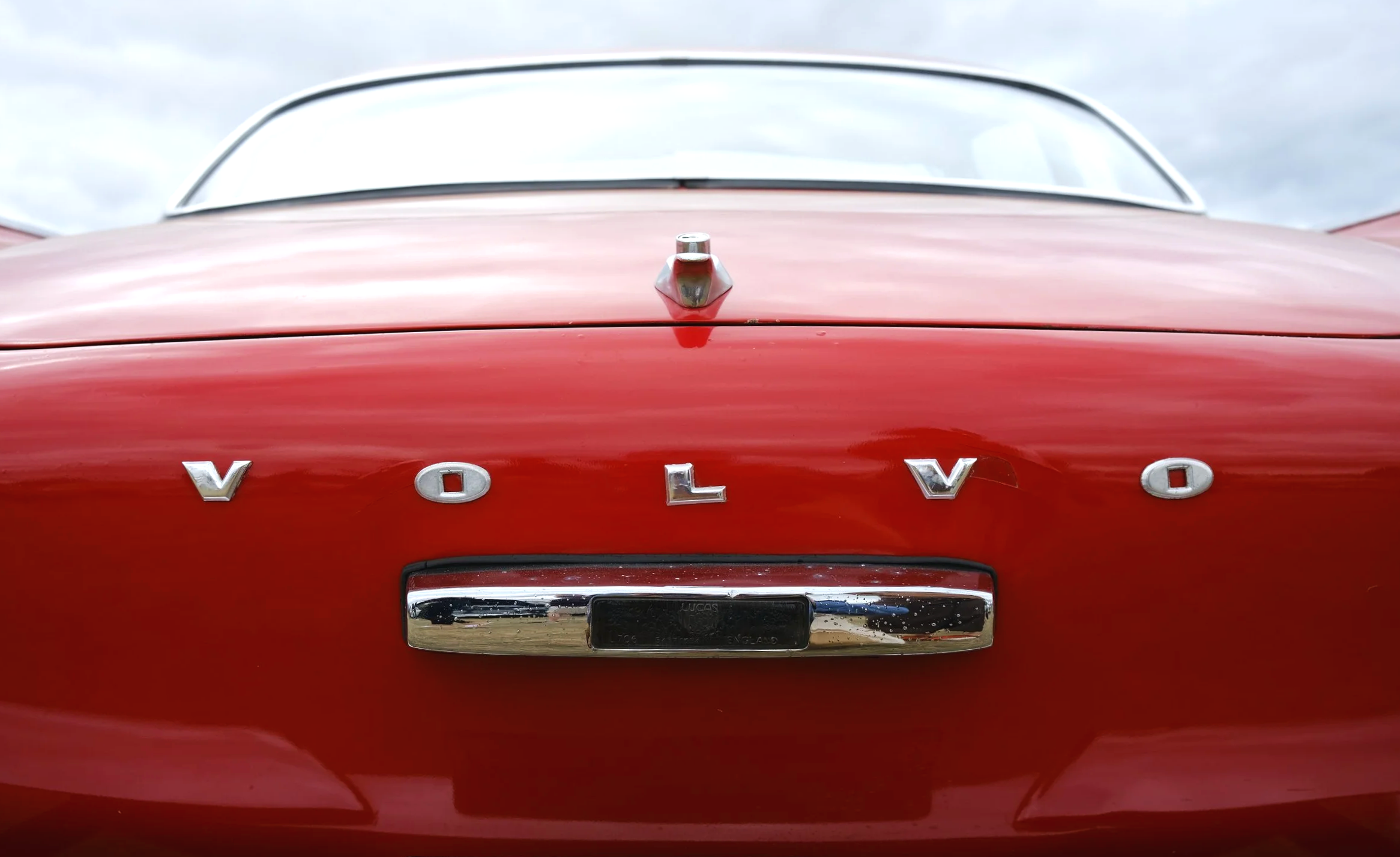
And maybe that’s the part of Swedish car culture that’s easiest to miss until you’re their in person. For a relatively small country, Sweden has had an outsized influence on the automobile. Italy has its legacy of racing passion. Germany has spent the better part of a century engineering increasingly elaborate ways to travel 250 km/h on the Autobahn. Sweden gave us Saab, the three-point seat belt, square wagons that refuse to die, and impossible to pronounce hypercars. But the fun part is how little preciousness there is about any of it. Cars are appreciated for what they are, what they aren’t, and whatever someone decides to make of them anyway. A teenager doing donuts in a Volvo that used to take their grandparent’s grocery-getter. A guy painstakingly keeping a 60-year-old Cadillac alive several thousand miles from Detroit. Someone cutting the back off a perfectly good wagon because, it needed a patio. Vallåkraträffen puts all of it in the same field.
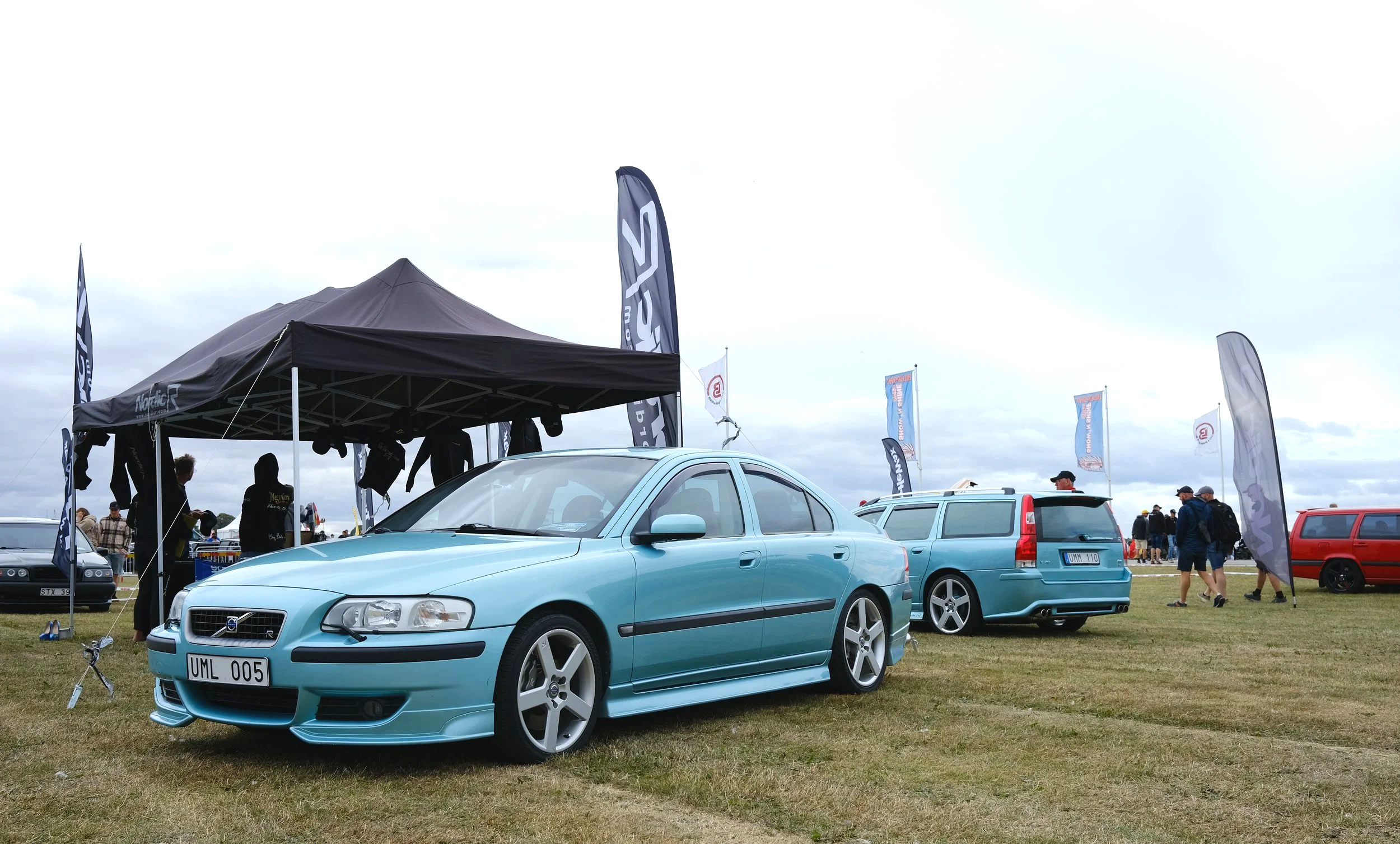
And underneath the chopped roofs, questionable suspension geometry and acres of American chrome, there’s something surprisingly straightforward going on. Swedes really like their cars here. And they have a uniquely endearing way of showing it.

WHAT TO KNOW BEFORE YOU GO
When: Usually at the end of August
Where: Enoch Thulins Airport, Norra Viarpsvägen, 261 92 Landskrona
Price: 160 SEK
Where to stay: Malmö or Copenhagen are the best spots to call home base before and after the show.
How to get there: Rent a car in Malmö and make the 30 minute trek out to the car show.