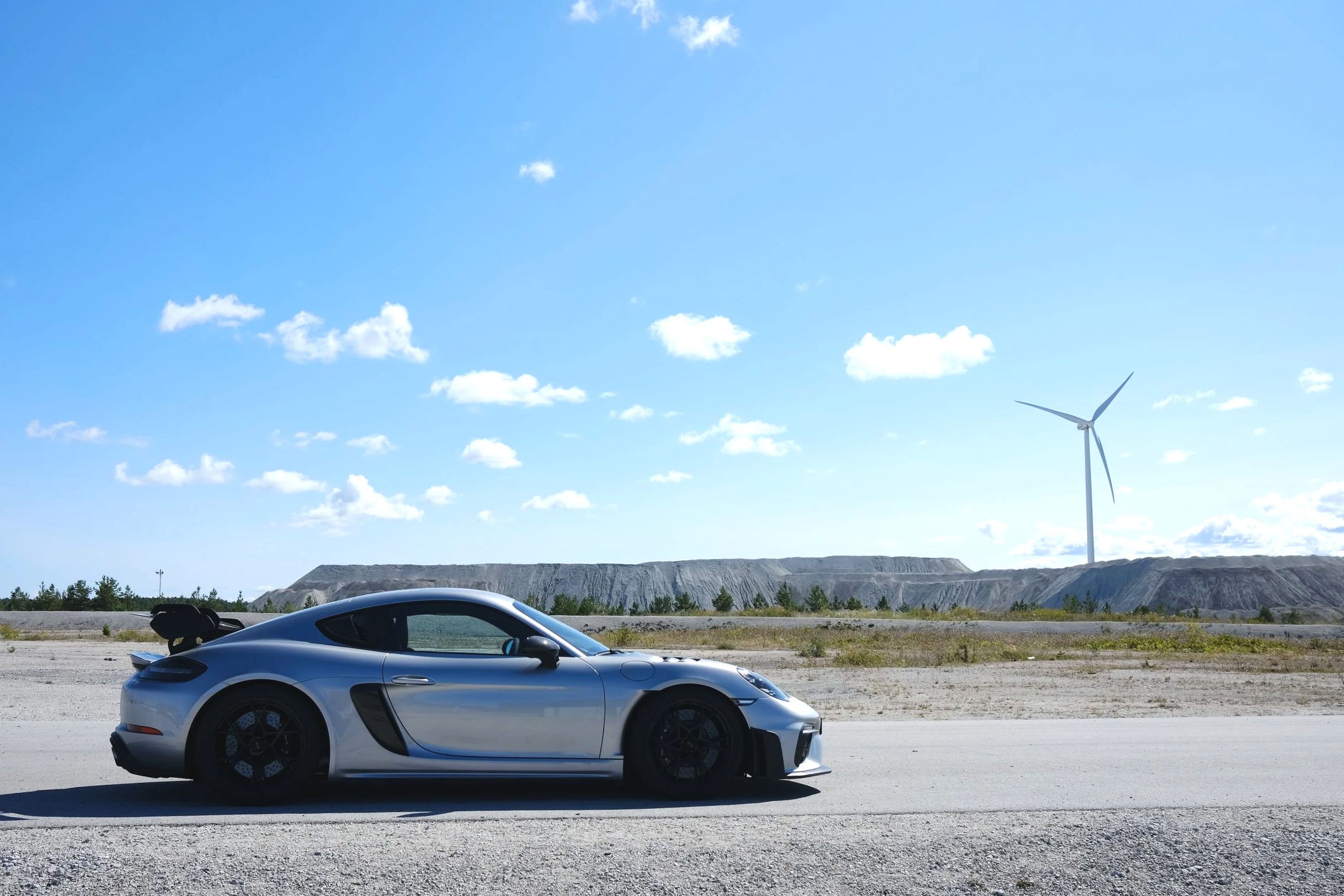
THE GOTLAND RING
TESTING THE FUTURE IN THE MIDDLE OF THE BALTIC SEA
Before we get started, give Gotland, Sweden a quick Google Image search. I’ll wait.
Okay, so you get it. It’s an old island full of old things. Castles, ruins, rocky beaches, more ruins, the impossibly quaint medieval town of Visby and, yes, more ruins. Gotland is where Swedes go to slow down. A laid-back escape from Stockholm where summer days stretch on and nobody seems in much of a hurry. Which makes it a fairly unexpected place to find one of the world’s longest modern race and test circuits. On paper, Gotland Ring makes almost no sense. In person, it somehow fits the island perfectly.
Let’s rewind to 2007. A whitey tighty clad Walter White is cooking meth on television, Michael Phelps is curb-stomping the Olympic competition and Honda is looking for their own Prius moment, putting serious money behind the idea that maybe cars don’t have to run on gasoline. Enter the Clarity, Honda’s hydrogen fuel-cell experiment for the real world. As part of that push toward alternative propulsion, they carved out test circuit inside a limestone quarry on this idyllic Swedish island. The Clarity has since come and gone, but Gotland Ring kept evolving, growing into a place dedicated to figuring out what sustainable performance might actually look like.
That philosophy comes largely from track operators Alec Arho Havrén and Lina Havrén. A former professional racer, Alec designed the circuit with inspiration from some of iconic corners around the world, stitching them into a layout that follows the natural contours of the quarry rather than bulldozing them flat. Construction relied heavily on local materials and zero-emission equipment, all in an effort to build a performance facility without decimating the natural beauty around it.
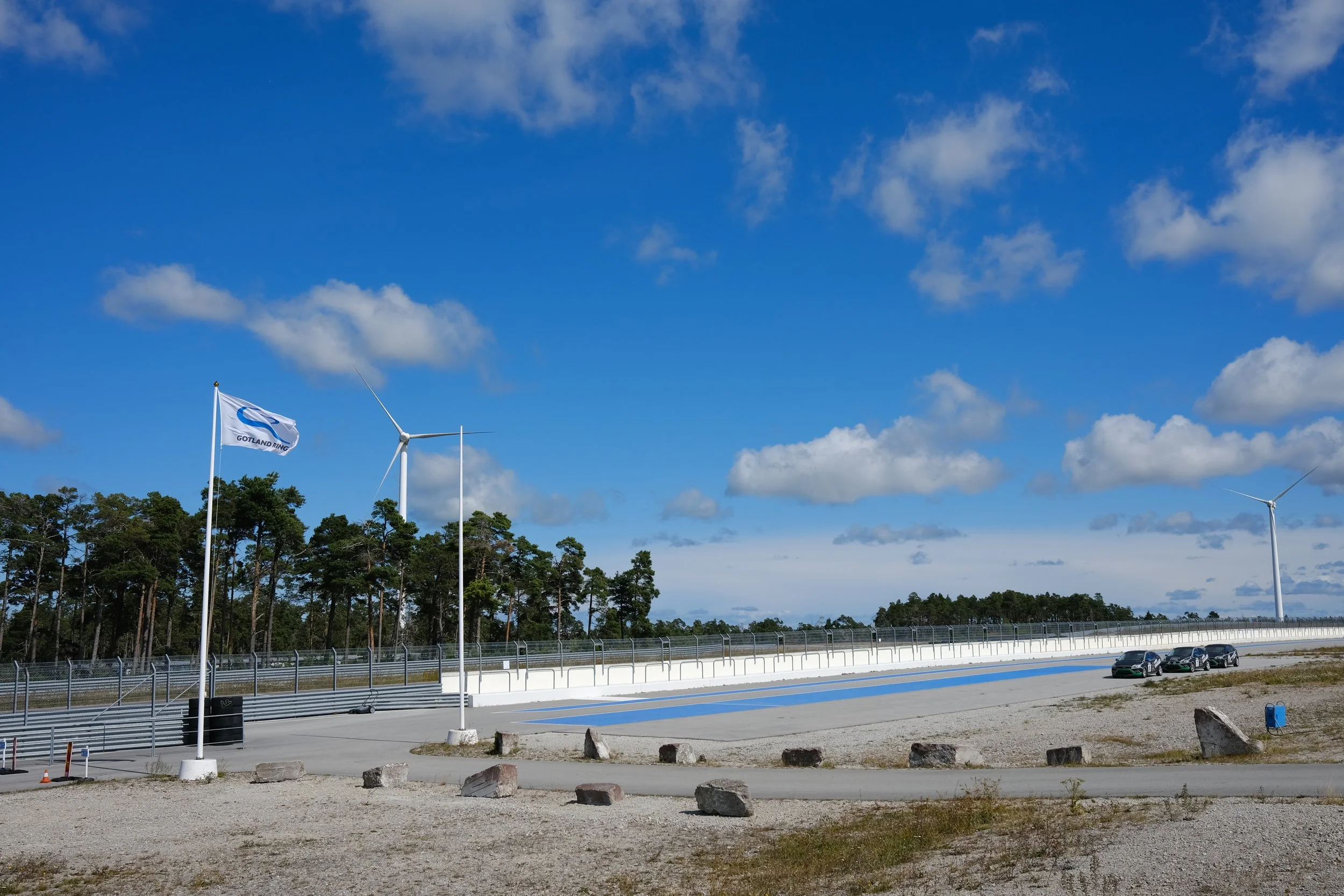
Ironically “sustainability” can be a dirty word amongst petrol heads, but at Gotland Ring, the philosophy doesn’t feel like homework. It makes the track better. The circuit rises and falls with the terrain, winding past wildflowers, bright blue quarry lakes and walls of stark white limestone. Instead of feeling like a racetrack dropped onto the landscape, it feels carved directly out of it.
That same thinking extends beyond the scenery. Gotland Ring also serves as a test bed for EV manufacturers, future transportation systems and new infrastructure, including smart-road technology capable of dynamically charging vehicles while they’re moving. Very sensible. Very Swedish.
Of course, there’s only so much you can learn about a racetrack by standing around talking about it.
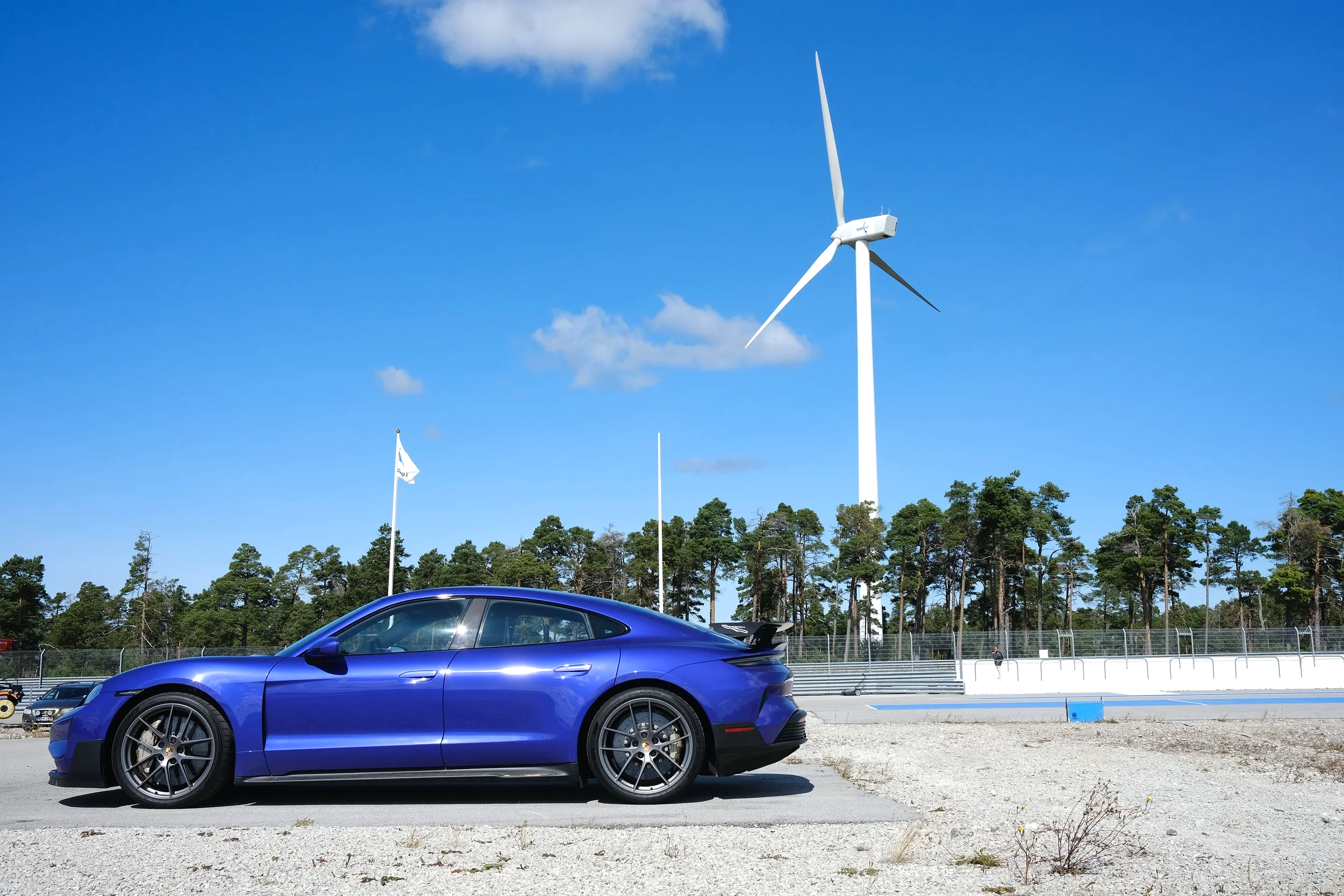
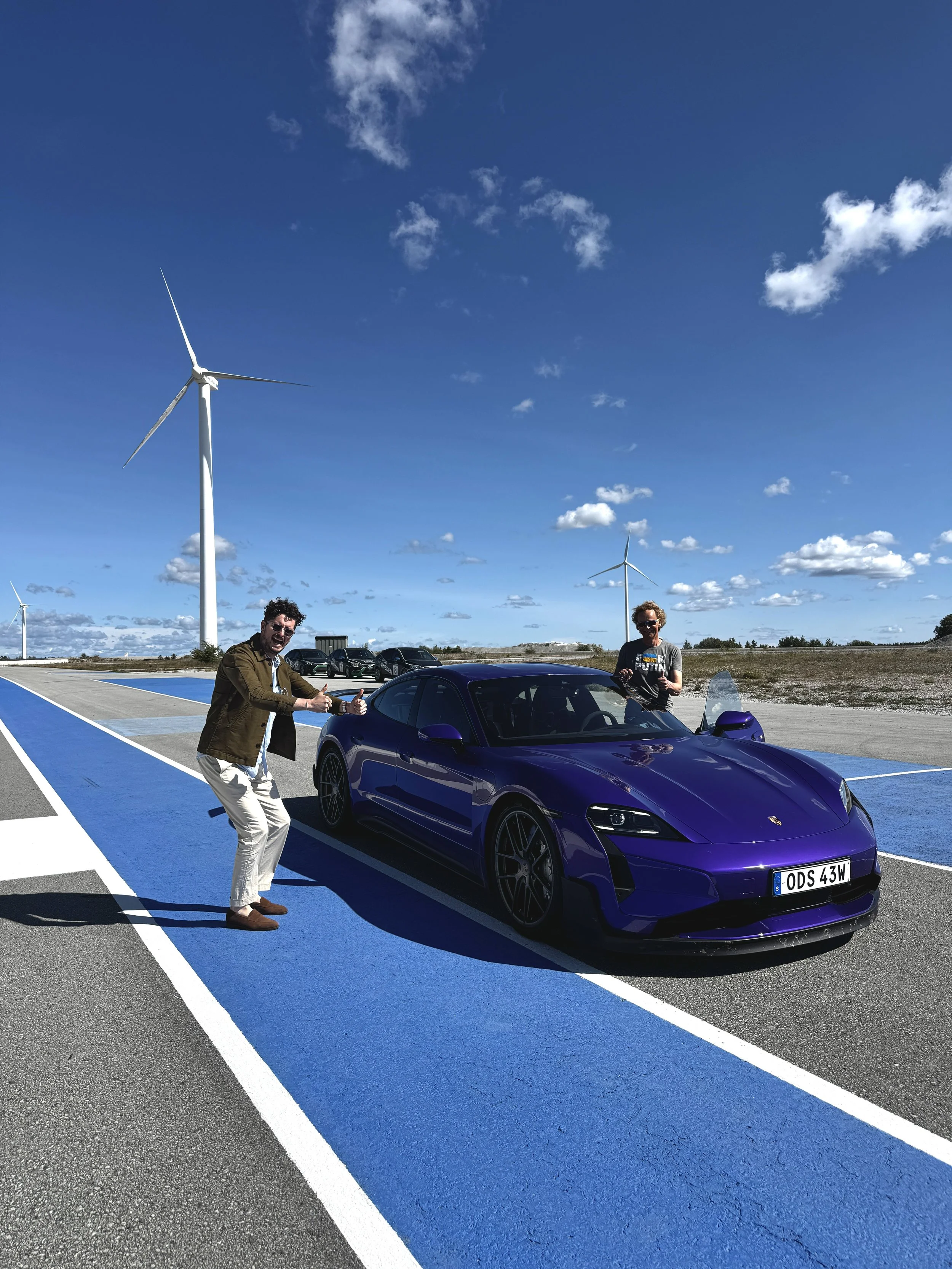
To give us a better look around Alec give us a ridealong around the track in his bright purple Porsche Taycan Turbo GT. What followed was less “tour” and more “high-speed rearrangement of internal organs.” As we blasted around the circuit, Alec calmly pointed out the native plants blooming beside the track while pitching the Taycan into corners at speeds that made those plants impossible to identify. I’ve done my fair share of ride-along laps, but a stripped-out EV engineered with the explicit purpose of setting new records around the Nürburgring delivers acceleration with a particular kind of savagery. The sort that prompts a sudden and deeply personal reconsideration of what you ate that morning. Once our internal organs had returned to their original locations, Alec and Lina—ever the laid-back Gotlanders—suggested we take our rental car out for a few parade laps.
About that rental car.
Gotland’s rental-car ecosystem is apparently just as relaxed as everything else on the island. A quick Google search led us to a company renting battered old Volkswagens for the princely sum of about $25 a day. No insurance desk. No laminated damage chart. Just a quick photo of your license and off you go in a 1995 Jetta with 160,000 kilometers on the clock, a broken temperature gauge, and not one body panel painted the same shade of silver.
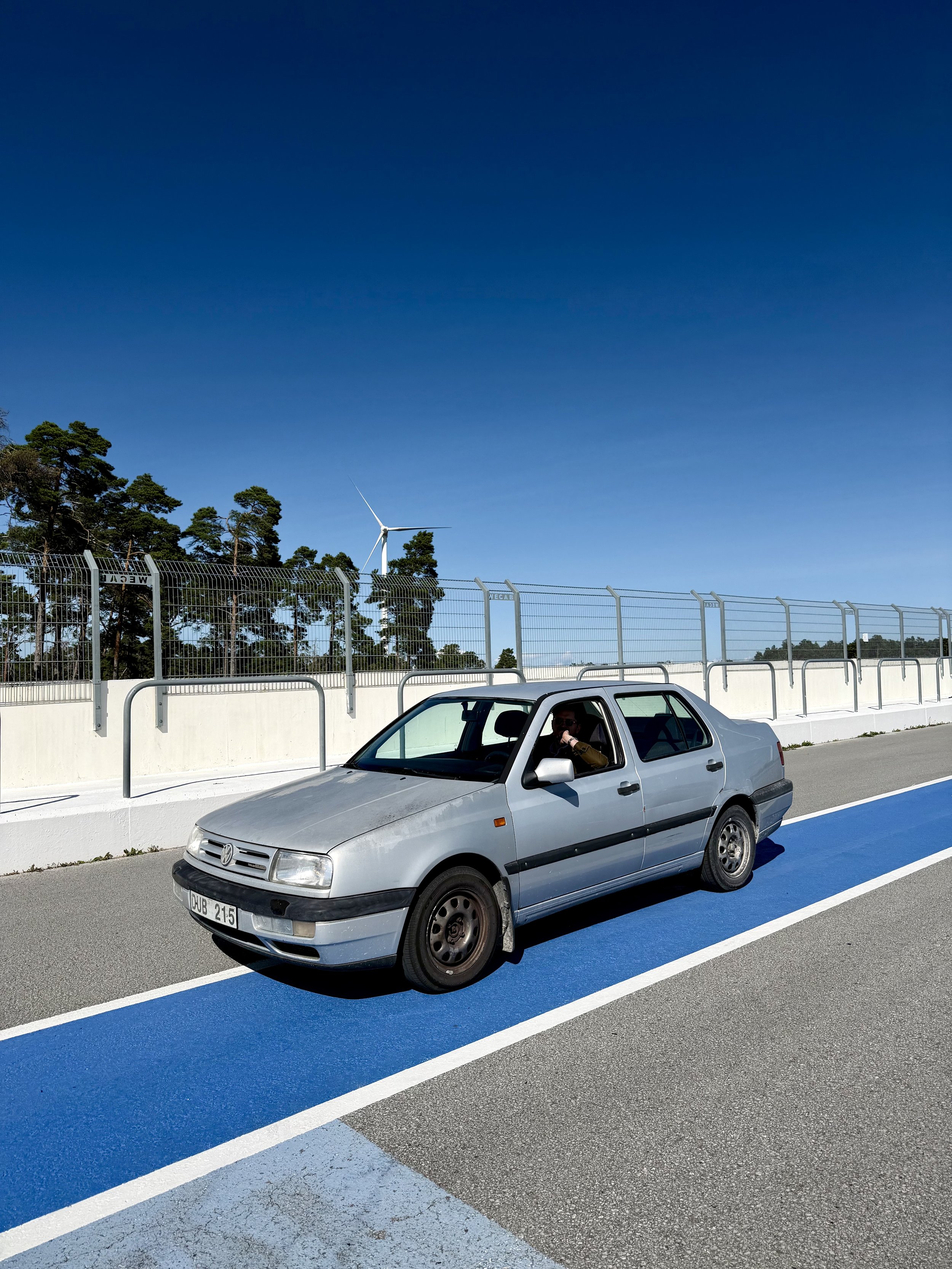
Perfect.
Our parade laps in our well-loved Jetta were considerably slower than Alec’s Taycan demonstration, but arguably no less dramatic. What it lacked in 1,000-plus horsepower it made up for in body roll, mystery noises, and the vague sense that every corner might reveal a new maintenance issue.
The whole day was bizarre in best way. Gotland is easygoing almost to the point of absurdity (very Swedish). And somehow its racetrack carries that same energy. One minute you’re looking out over wildflowers and limestone cliffs. The next you’re being violently introduced to the limits of an electric Porsche. Then you’re back in a faded Jetta, puttering around one of the most remarkable circuits and well-kept secrets in Europe.
For a place that makes very little sense on paper, Gotland Ring feels completely at home.
WHAT TO KNOW BEFORE YOU GO
Where: Storugns 2741, 624 53 Lärbro, Sweden
Price: 2,650.00 kr – 3,600.00 kr (ring taxi)
Food: None, pack a picnic basket.
Where to stay: Book a hotel in Visby. A track visit is typcialy a day-long affair.
How to get there: Hop on a ferry from Stockholm to get to the island, then take a car to the track.
Inside scoop: Skip the bus, rent a beater in Visby and ask nicely about parade laps—you may end up circling one of Europe’s wildest tracks in a $25-a-day Jetta.